Choosing an SS pipe starts with the service, not the catalogue label: pressure, temperature, fluid chemistry, flow, geometry and fabrication method all change the correct specification. By the end, you will be able to define the pipe dimensions, grade, schedule, testing, surface condition and documentation needed for a defensible purchase.
Key takeaways
- Match seamless or welded construction to service conditions and installation access.
- Specify NPS, schedule, tube size and flow requirements together.
- Select the grade for chloride exposure, temperature and actual corrosion risk.
- Compare test reports, traceability, finish and fabrication controls before buying.
Match the pipe construction to the service and installation
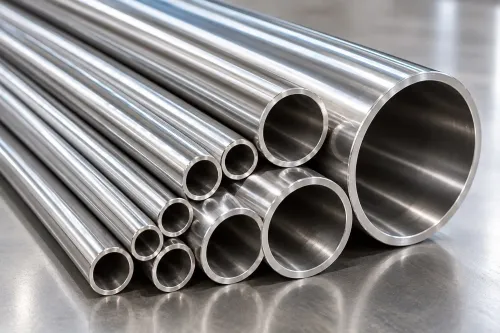
Choose the construction that matches the fluid, pressure, temperature and route; a seamless pipe is not automatically safer than a welded pipe. Specify the product standard as well as the grade: ASTM A312 covers austenitic seamless and welded pipe, while ASTM A790 covers seamless and welded ferritic/austenitic duplex pipe.
| Option | Best fit | Main caution |
|---|---|---|
| Seamless pipe | High pressure, severe cyclic service, high temperature or small-bore lines where a longitudinal weld is undesirable | Higher cost and less consistent availability; inspect dimensional tolerances before installation |
| Welded pipe | General process lines, utilities and large diameters where efficient fabrication matters | Require weld procedure qualification, examination and surface treatment |
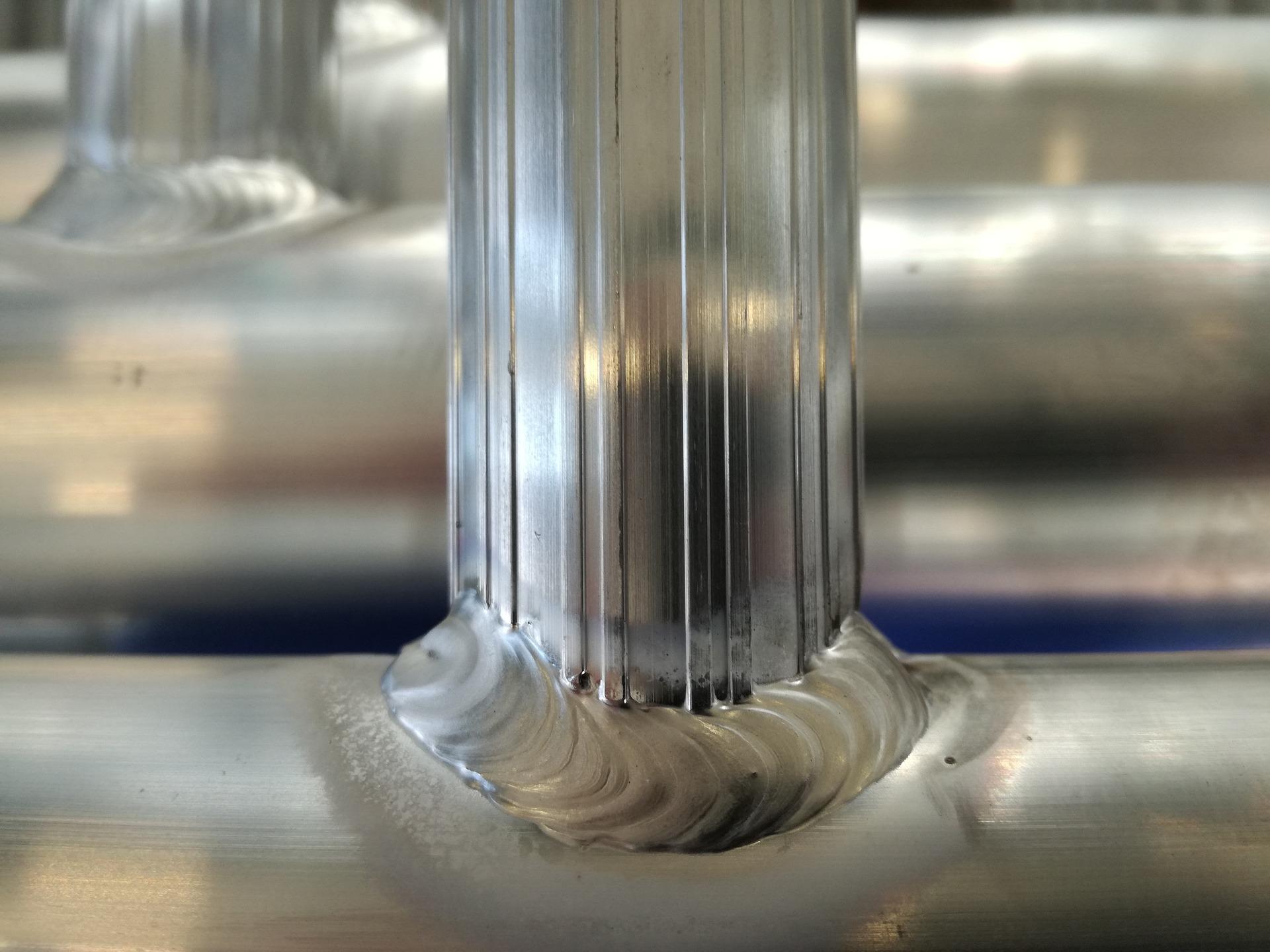
| TIG welded pipe | Clean, controlled welds for instrumentation, process or thin-wall service | Heat tint, oxide scale and rough profiles need pickling, passivation or electropolishing as the service demands |
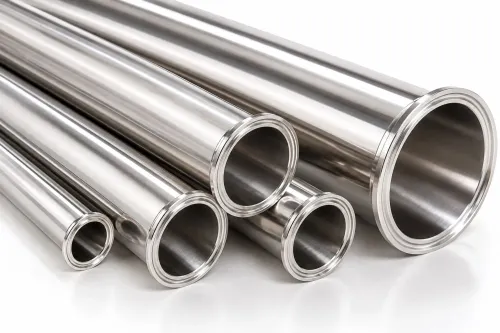
| Sanitary pipe | Hygienic fluid, clean-in-place systems and drainable process layouts | Demand smooth internal surfaces, orbital-weld control and crevice-free fittings |
A sanitary pipe and tube comparison prevents a costly terminology mistake: pipe is commonly selected by NPS and schedule, while tube is ordered by actual outside diameter and wall thickness. Use sanitary tube for compact equipment, instrumentation or tight bends only when its pressure, joining method and cleaning requirements fit the system.
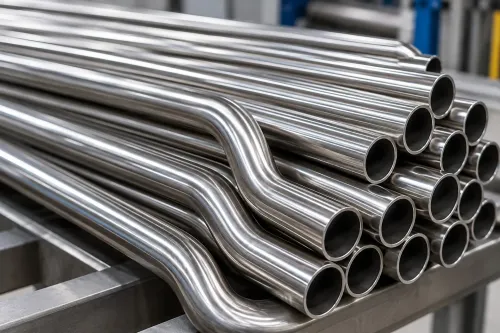
For chloride-bearing, acidic or stagnant fluids, examine weld zones, deposits and crevices rather than trusting the word “stainless.” Locate vents, drains, supports and bends so the line does not trap liquid or impose force on equipment nozzles.
Specify dimensions correctly: NPS, schedule, tube size and flow
Choose the bore from the required flow, allowable velocity and available pressure drop, then select wall thickness for the design pressure, temperature and installation loads. An undersized bore increases friction, pump demand and noise; an oversized line adds cost, dead volume and slow drainage.
Pipe and tube dimensions are specified differently. Use this distinction in the purchase order:
| Specification | Dimension basis | Example wording |
|---|---|---|
| NPS pipe | Nominal size, with schedule defining standard wall dimensions | NPS 2, Schedule 10S, ASME B36.19M |
| Stainless tube | Actual outside diameter and wall thickness | 2.000 inch outside diameter × 0.065 inch wall thickness |
| Custom or heavy-wall pipe | NPS plus a stated wall thickness when a schedule is unsuitable | NPS 2 × 0.250 inch wall thickness |
For stainless-steel pipe, read the bore and wall dimensions from ASME B36.19M rather than assuming ASME B36.10M applies. Calculate internal diameter from the specified outside diameter and wall thickness; do not treat NPS as the actual bore.
- Set a target flow velocity that suits the fluid, erosion risk, noise limit and cleaning method.
- Check friction loss against the pump or compressor margin, including fittings, valves, strainers and elevation.
- Select a schedule or wall thickness that satisfies the governing piping code, allowable stress, corrosion or erosion allowance, weld efficiency and external-pressure check.
- Confirm the resulting outside diameter fits supports, insulation, flanges and available installation space.
A schedule is not a complete pressure rating. State the product standard, such as ASTM A312, alongside NPS, schedule and grade.
Choose the stainless-steel grade from the actual corrosion and temperature risk
Chloride concentration, stagnant pockets, deposits, crevices and temperature matter more than the word “stainless.” Molybdenum makes 316/316L more resistant to chloride pitting and crevice corrosion than 304/304L, but neither is a universal choice for seawater, hot concentrated chlorides or reducing acids. Use PREN as a ranking aid, not a service-life prediction.
| Grade | Material standard | Selection basis |
|---|---|---|
| 304/304L | ASTM A312 | General corrosive service; choose 304L when welded fabrication could cause sensitization. |
| 316/316L | ASTM A312 | Chloride exposure above 304’s capability; confirm the actual concentration, temperature and stagnant zones. |
| 321 | ASTM A312 | High-temperature welded service where titanium stabilization limits chromium-carbide sensitization. |
| 347 | ASTM A312 | High-temperature service requiring niobium-stabilized austenitic stainless steel, including repeated welding or thermal exposure. |
| Duplex grades | ASTM A790 | Higher resistance to chloride pitting and stronger pressure containment are needed; verify toughness and welding controls. |
Specify the grade and standard together. ASTM A312 and ASTM A790 differ in chemistry, heat treatment, mechanical tests, dimensions and acceptance criteria, so “316 pipe” alone is incomplete. The L designation mainly reduces welding-related sensitization; it does not defeat every corrosion mechanism.
For low-temperature or cryogenic duty, review the minimum design temperature, wall thickness, design code and impact-test requirements. Austenitic grades generally retain toughness better than ferritic or duplex grades.
Require heat-number traceability through fabrication; use positive material identification when mix-ups matter, and use laboratory or optical-emission testing when carbon content must distinguish 304 from 304L or 316 from 316L.
Verify pressure, temperature, corrosion allowance and fabrication controls
A pressure rating is not a complete design check. Verify design pressure and temperature against the actual grade’s allowable stress, wall thickness, joint efficiency, corrosion or erosion allowance, cyclic loads, external pressure and branch connections under the governing code.
- Select the code before approving the pipe. Use ASME B31.3 for process piping, ASME B31.1 for power piping, or the applicable project code; ASME Section VIII governs pressure vessels, not ordinary piping.
- Calculate the required wall and pressure rating at the highest metal temperature, then check vacuum, thermal expansion, surge and repeated pressure cycles. A schedule that passes internal pressure can still collapse under external pressure or fail at a branch.
- Add a stated corrosion or erosion allowance based on the process, velocity, contaminants and design life. Do not treat PREN as a service-life prediction; crevices, welds, temperature and stagnant zones can defeat a favorable calculation.
- Control fabrication from heat receipt through installation. Keep the heat number linked to the material test report after cutting, qualify the welding procedure, and use positive material identification when grade mix-up could cause harm. X-ray fluorescence does not reliably separate 304 from 304L or 316 from 316L by carbon content.
- Specify weld cleaning and finishing. Remove heat tint, embedded iron, oxide scale and crevices by the treatment suited to service, such as pickling, passivation or electropolishing.
Check flanges, fasteners and transitions where stainless joins carbon steel, galvanized steel, copper alloys or aluminum. Electrical isolation, drainage and compatible joining materials can prevent a galvanic cell that a higher stainless grade alone will not stop.
Compare suppliers by testing, traceability, finish and total project risk
Approve a supplier on documented process control, not an alloy label and a low quotation. Compare the evidence that will prevent a wrong pipe, contaminated surface or untraceable weld from reaching installation.
| Check | Evidence to compare | Failure exposed |
|---|---|---|
| Product standard | ASTM A312 for austenitic pipe or ASTM A790 for duplex pipe; confirm chemistry, heat treatment, tests and dimensions | A nominally correct grade supplied to the wrong acceptance criteria |
| Dimensions | Purchase documents and markings aligned with ASME B36.19M, including NPS and schedule | A pipe or tube ordered by the wrong sizing system |
| Traceability | Heat number carried from the material test report through cutting, fabrication and delivery | Mixed heats or unidentified replacement pieces |
| Testing | Mechanical, hydrostatic, chemical and weld records, plus PMI when mix-up risk is significant | A mill certificate that does not match the installed material |
| Surface condition | Defined removal of weld heat tint, scale, iron contamination and embedded debris before passivation | A bright-looking surface that still corrodes at welds |
Ask SMD Impex, or any shortlisted supplier, to show how each cut piece retains its heat number and how substitutions are blocked. Handheld X-ray fluorescence does not reliably separate 304 from 304L or 316 from 316L by carbon; use optical emission or laboratory testing when that distinction controls welding.
For hygienic service, compare internal roughness, weld-bead profile, orbital-weld qualifications, drainability and dead-leg control. Specify whether ASTM A380 cleaning and descaling practices apply, then state the ASTM A967 passivation treatment and verification test. The cheapest quote becomes expensive when retesting, rework or field replacement delays commissioning.
Related products
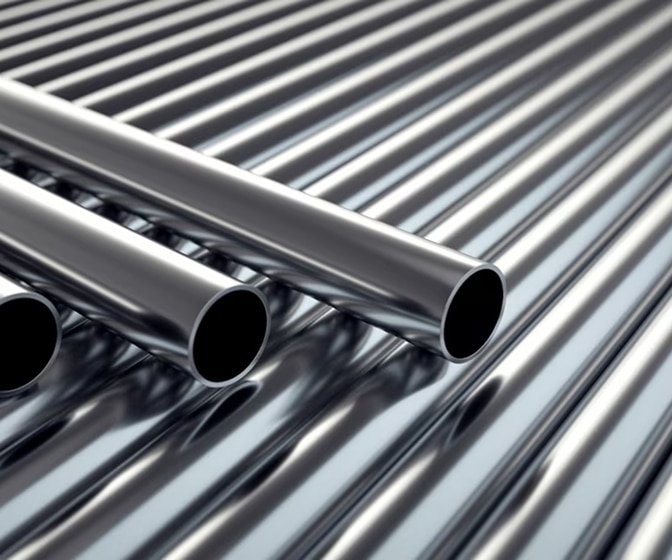 | Seamless Pipes/Tubes Manufacturer & Supplier – Premium Quality Industrial Seamless Pipes and Tubes Seamless Pipes/Tubes Seamless Pipes and Tubes are high-strength... View product → |
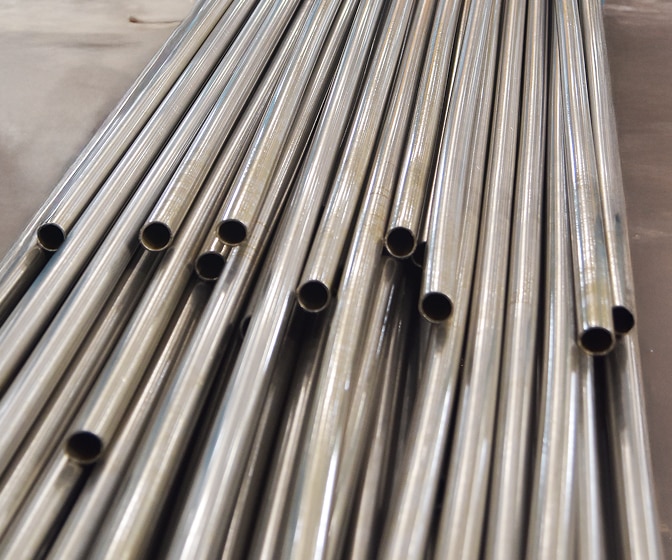 | Large Diameter Pipes Manufacturer & Supplier Large Diameter Pipes are engineered for heavy-duty industrial applications where high flow capacity, structural strength, and... View product → |
Frequently asked questions
Is seamless stainless steel pipe always safer than welded pipe?
No. Choose seamless or welded construction according to the fluid, pressure, temperature and installation route. Seamless pipe is not automatically safer.
What information should you include when specifying stainless steel pipe dimensions?
State NPS and schedule for pipe, or outside diameter and wall thickness for tube, then check the required flow and internal diameter.
How do you choose the correct stainless steel grade?
Assess the actual corrosion exposure, chloride concentration, temperature and process conditions before selecting an austenitic, ferritic or duplex grade.
Which standards cover stainless steel industrial pipe?
ASTM A312 covers austenitic seamless and welded pipe. ASTM A790 covers seamless and welded ferritic/austenitic duplex pipe.
What should you verify before ordering stainless steel pipe?
Verify pressure and temperature ratings, corrosion allowance, weld and fabrication controls, inspection records, material test reports and heat-number traceability.
Related products
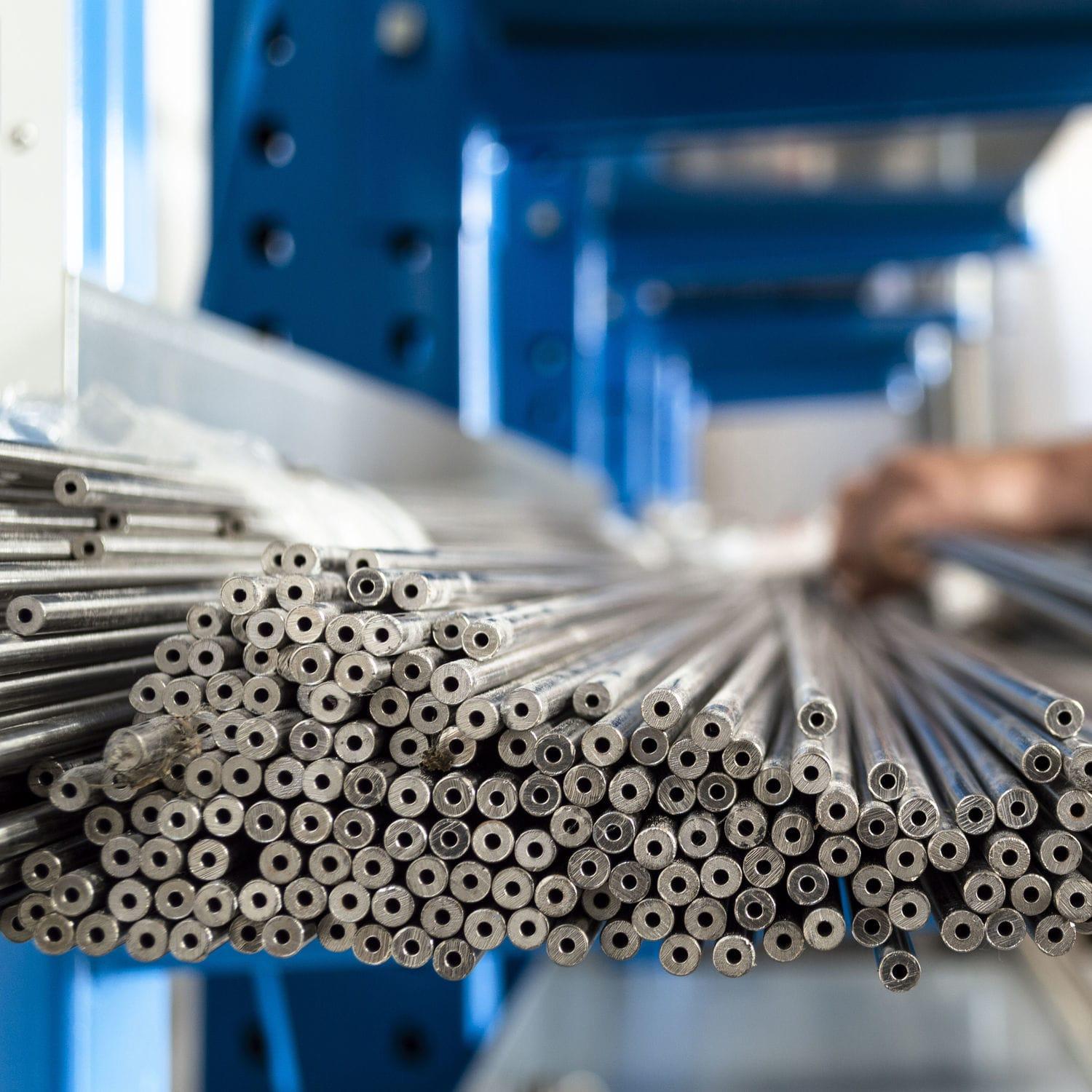 | Stainless Steel Hydraulic Tubes Stainless Steel Hydraulic Tubes Stainless Steel Hydraulic Tubes are engineered for high-pressure hydraulic and pneumatic applications where strength, corrosion resistance, and... View product → |
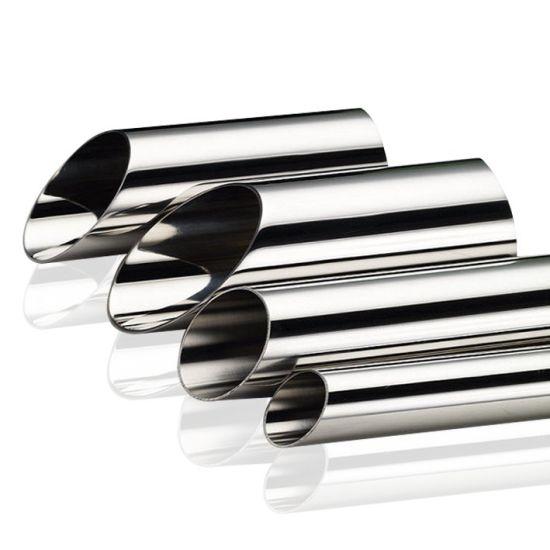 | Stainless Steel Sanitary Tubes Stainless Steel Sanitary Tubes Stainless Steel Sanitary Tubes are precision-engineered tubes manufactured to meet stringent hygiene standards for industries where cleanliness and... View product → |
 | TIG Welded Tubes & Pipes High-quality TIG Welded Tubes & Pipes are widely used in industries where precision, corrosion resistance, and superior weld quality are essential. View product → |
 | Stainless Steel Instrumentation Tubes Stainless Steel Instrumentation Tubes High-Precision Tubing for Industrial Applications Stainless Steel Instrumentation Tubes Supplier in Vadodara Stainless Steel Instrumentation Tubes... View product → |