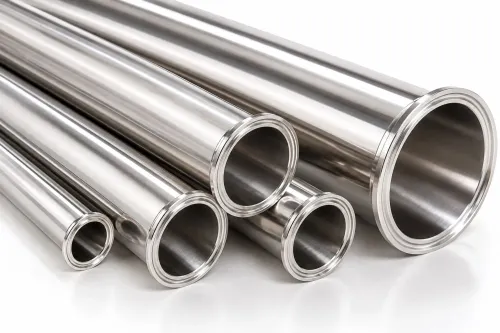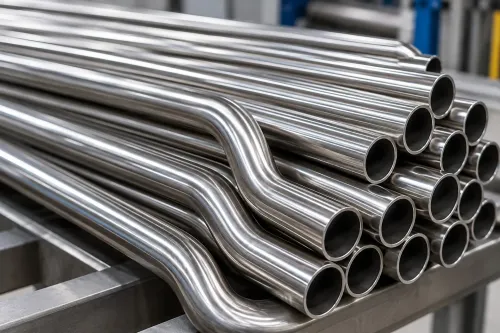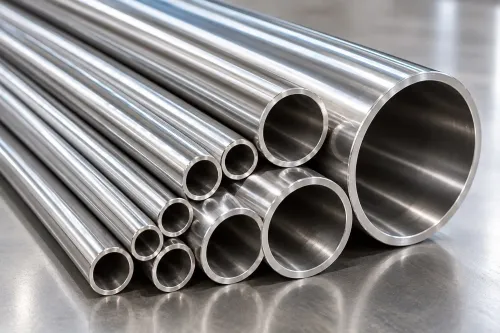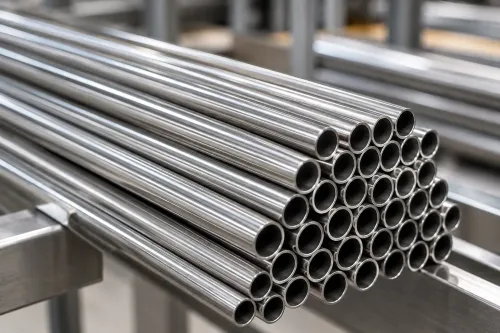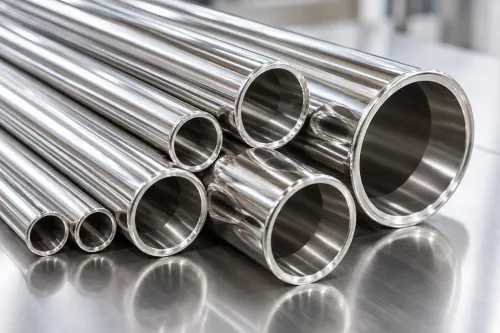
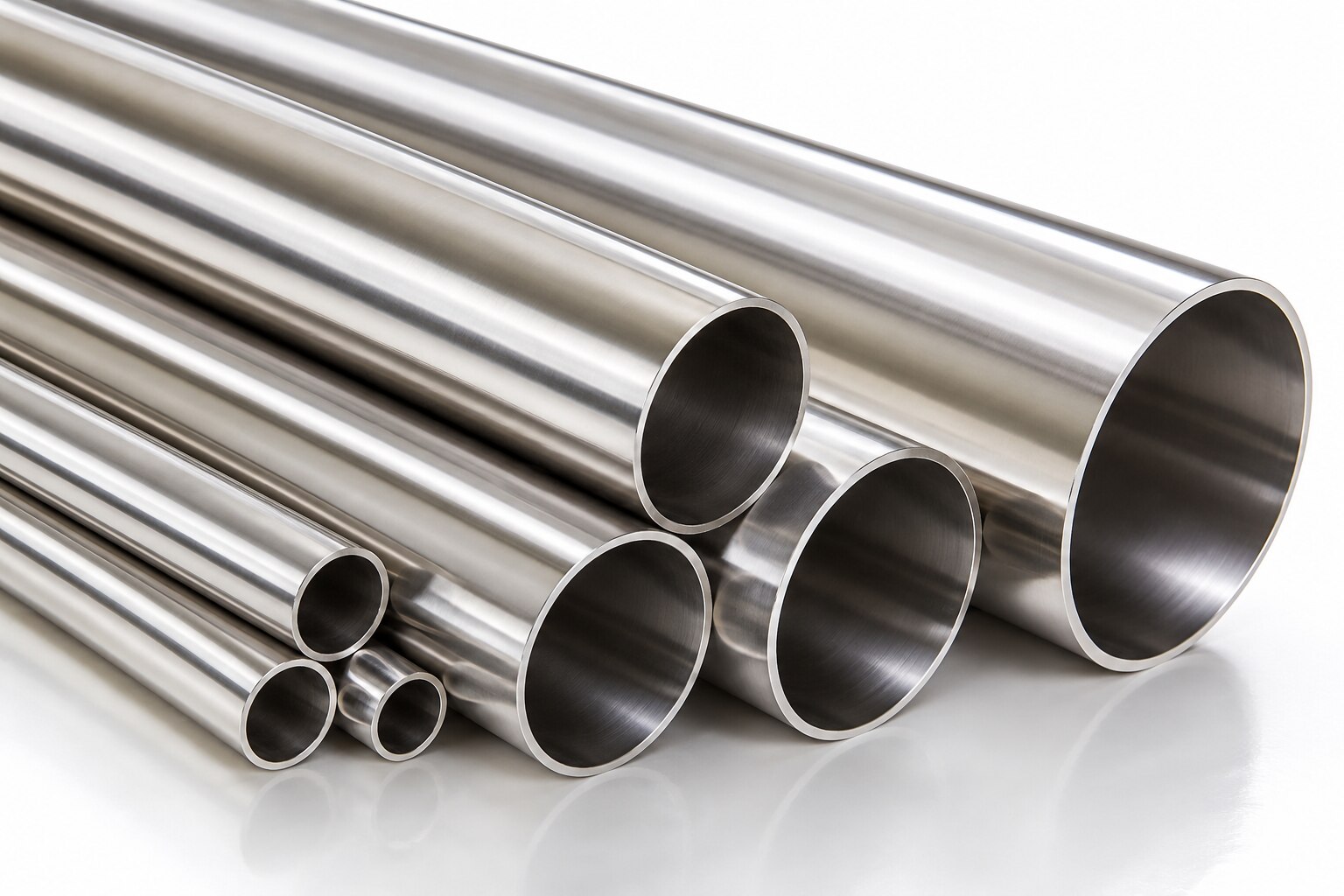
A TIG-welded tube is not selected safely from stainless-steel grade or surface appearance alone. You need to match the material and product standard to the service, define dimensions and end condition, qualify the longitudinal seam, and specify testing and documentation before requesting a quotation.
Key takeaways
- Select the grade from fluid chemistry, temperature, chloride exposure and cleaning conditions.
- Specify the product standard, wall thickness, outside diameter and pressure design basis.
- Inspect the longitudinal weld for penetration, alignment, defects and heat-tint control.
- Request traceability documents, test results, surface requirements and installation-ready ends.
Match the Stainless-Steel Grade to the Actual Service
Select the grade from the fluid, temperature and operating conditions, not from the word “stainless.” A 304L stainless steel tube suits many clean, mildly corrosive services, but chloride exposure, deposits, crevices, acids or aggressive cleaning chemicals can cause localized attack.
A 316L stainless steel tube adds molybdenum for better resistance to many chloride environments, but it is not automatically safe in concentrated chlorides, hot stagnant brine or reducing acids.
| Grade | Strength | Check before selection |
|---|---|---|
| 304L stainless steel tube | General corrosion resistance and lower sensitization risk | Chloride concentration, pH, temperature, deposits and crevices |
| 316L stainless steel tube | Improved resistance to many localized chloride attacks | Hot brine, concentrated chlorides, acids, cleaning chemicals and flow velocity |
| Duplex stainless steel tube | Higher strength and useful resistance in selected chloride services | Grade-specific temperature limits, weld balance, cooling rate and intermetallic-phase risk |
Give the supplier the chloride concentration, pH, oxidizing conditions, maximum and minimum temperatures, velocity, cleaning cycle and shutdown conditions. Low carbon reduces sensitization risk but does not eliminate it; require the specified intergranular-corrosion test when that failure mode matters.
For duplex tube, define heat input, interpass temperature, purge gas and any ASTM A923 examination, because an attractive weld surface does not prove a sound phase balance.
Set the Product Standard, Pressure Basis and Dimensions
Define the service standard before requesting a quotation; the stainless-steel grade alone does not establish the tube’s intended use or pressure capability.
1. Select the product standard that matches the application. ASTM A269/A269M covers general-service austenitic tubing; ASTM A249/A249M covers welded boiler, heat-exchanger and condenser tubing; ASTM A270/A270M covers sanitary tubing; and ASTM A554/A554M covers mechanical and ornamental tubing. Do not treat ASTM A554 tube as pressure-service tube because its weld appears sound.
2. State the pressure design basis separately from the product standard. Identify the governing code, such as ASME B31.3 for process piping, design pressure and temperature, permitted wall-thickness tolerance, corrosion or erosion allowance, cyclic service, and any external-pressure or vacuum calculation. The design must use the actual minimum wall, not only nominal thickness.
3. Name the required proof method and acceptance criteria. If the order uses hydrostatic testing or nondestructive electric testing, specify test pressure or instrument sensitivity, calibration reference, test length and acceptance limits. Eddy-current testing can find many seam and surface discontinuities quickly, but it does not replace pressure proof where containment must be demonstrated.
4. Put every controlling measurement on the order: outside diameter or nominal bore, minimum or nominal wall, ovality, straightness, cut length, end squareness and local weld-zone limits. State whether measurements occur before or after polishing or other treatment, and whether wall thickness is minimum or average.
Examine the Longitudinal Weld, Not Just the Outer Finish
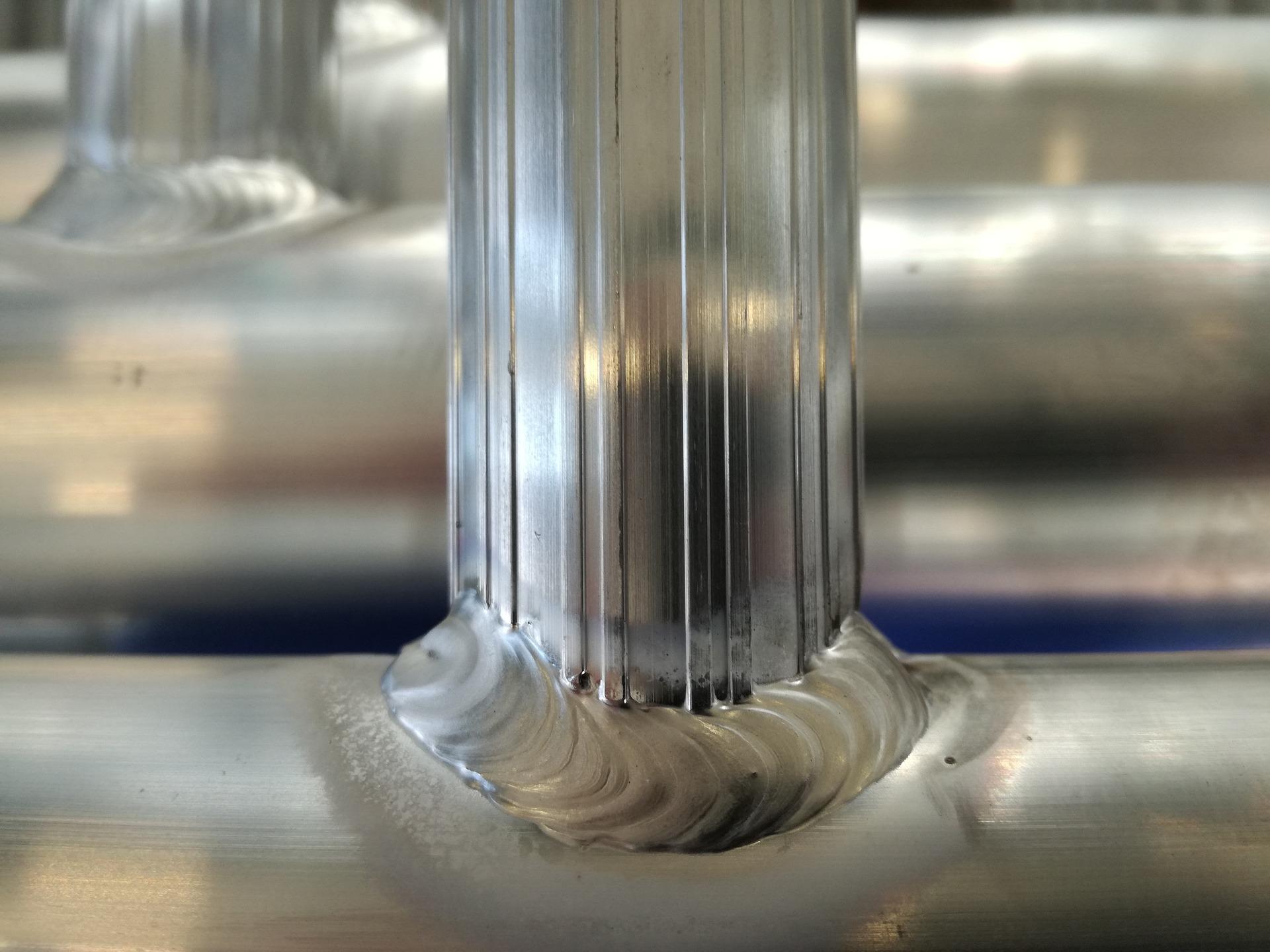
A polished outside cannot prove a controlled longitudinal seam. Inspect the bore and request process evidence: oxidation, root shape, heat input and weld chemistry determine whether the tube will withstand its service.
- Confirm whether the seam is an autogenous weld or uses filler metal. For filler metal, record its classification and chemistry, then obtain the weld qualification for the actual grade and thickness.
- Ask for the qualified welding procedure, including maximum heat input or minimum travel speed, interpass-temperature limit, and whether solution annealing follows welding.
- Verify the weld shielding gas, internal argon purge, purge-gas quality, end dams or continuous purge, and the permitted internal discoloration. Blue, purple, gray or black root tint signals oxidation that can damage the chromium-rich passive surface.
- Define the TIG weld bead condition inside the tube: as-welded, bead-rolled, mechanically removed or chemically removed. Set limits for crown, concavity, undercut, root mismatch and local bore restriction.
A seam that looks smooth outside can still trap particles, increase pressure loss or create a corrosion site inside. Require a borescope inspection or representative internal photographs when the bore matters, and reject tubes that meet external appearance criteria while exceeding the specified root profile or discoloration limit.
Specify Corrosion Control, Surface Finish and Testing
Specify internal and external finish separately; a single outside Ra value cannot reveal bore roughness, weld-zone pits, embedded iron, heat tint, or circumferential grinding marks. For sanitary service, use ASTM A270 where applicable and state whether dimensions are checked before or after treatment.
- Set maximum Ra values, the measurement method, and the direction of measurement for the bore, exterior, and weld zone.
- Define the permitted weld-bead profile, visual condition, internal discoloration, and surface marks. Heavy blue, purple, gray, or black tint indicates inadequate oxidation control.
- Distinguish pickling, passivation and electropolishing. Pickling removes scale and contamination; passivation restores the protective oxide layer; electropolishing removes a controlled surface layer to improve smoothness and cleanability.
- Require internal argon purging, purge-gas quality, end dams or continuous purge, and the permitted post-weld cleaning treatment.
For austenitic tube, specify corrosion evaluation when sensitization could cause intergranular corrosion in the heat-affected zone. For duplex or super-duplex grades, identify the applicable ASTM A923 method and acceptance level for detrimental intermetallic phases.
Choose either a hydrostatic test or eddy-current testing under the product standard, then record pressure or instrument sensitivity, calibration reference, test length, and acceptance criteria. Eddy-current testing rapidly detects many discontinuities, but it does not replace hydrostatic proof when pressure containment must be demonstrated.
Choose the Tube Construction and End Condition for Installation
The TIG welded versus seamless tube decision depends on failure risk and fabrication needs. Choose TIG-welded tube for controlled wall thickness, consistent dimensions, thin-wall sections, long lengths and economical fabrication, provided the longitudinal seam is qualified for the service.
Prefer seamless tube when the design gives little tolerance for a weld discontinuity, especially in severe cyclic service or hydrogen service; confirm this choice against the applicable design code rather than treating seamless construction as an automatic pressure rating.
| Option | Use it when | Main caution |
|---|---|---|
| TIG-welded tube | Orbital welding and repeatable butt joints | Verify seam procedure, purge and inspection |
| Seamless tube | Weld-seam risk dominates the design | It does not remove sizing or pressure-design duties |
| Plain ends | Orbital welding, socket welding or standard butt welding | Protect the bore from contamination |
| Bevelled ends | Full-penetration butt welding on thicker walls | Match bevel angle and land to the procedure |
| Threaded ends | Threaded fittings or removable low-temperature connections | Threads reduce wall section and collect contamination |
| Grooved ends | Mechanical couplings requiring rapid assembly | Confirm groove dimensions and coupling pressure limits |
Use plain ends for orbital welding because a square, clean face supports consistent alignment and purge. Select bevelled ends when the joining procedure needs filler access and full penetration; reserve threaded ends and grooved ends for systems designed around those connections, not as substitutes for a qualified weld.
Turn the Selection Into a Verifiable Purchase Specification
Put acceptance criteria in the enquiry, not in an after-delivery argument. State the product standard and grade, outside diameter, wall thickness, length, finish, end condition, weld treatment, inspection regime, and design-code basis. Define whether wall thickness is nominal, average, or minimum, and whether measurements occur before or after polishing or cleaning.
- Require heat number traceability linking each tube to its heat number, grade, product form, chemical analysis, mechanical properties, heat-treatment condition, weld-process information, and test results.
- Request a material test certificate and an EN 10204 type 3.1 certificate. The latter confirms manufacturer-validated inspection results; it does not automatically prove compliance with your weld, cleanliness, surface, or pressure criteria.
- Write tube dimensional tolerances for outside diameter, wall thickness, ovality, straightness, length, end squareness, and weld-zone dimensions.
- State the pressure-code calculation, minimum permitted wall after tolerance, design temperature, corrosion allowance, and any vacuum requirement.
Whether you buy from SMD Impex or another supplier, attach a drawing and inspection checklist, then record actual readings against every acceptance limit before release. Reject tubes with missing traceability or certificates that cannot be matched to the delivered bundle.
Related product
 | TIG Welded Tubes & Pipes High-quality TIG Welded Tubes & Pipes are widely used in industries where precision, corrosion resistance, and superior weld quality are essential. View product → |
Frequently asked questions
How do I match stainless-steel grade to the service?
Assess the fluid, operating temperature, chloride exposure, deposits, crevices, acids and cleaning chemicals before choosing a grade. 304L suits many clean, mildly corrosive services, while more aggressive conditions require a corrosion review.
What dimensions and standards should I specify for TIG welded tubes?
State the product standard, outside diameter, wall thickness or schedule, dimensional tolerances, length, pressure design basis and material grade. Do not rely on a size description alone.
What should I examine on a TIG-welded longitudinal seam?
Check weld alignment, penetration, bead consistency, surface defects, heat tint and evidence of grinding or repair. Match the inspection method and acceptance criteria to the service risk.
Which corrosion controls, surface finish and tests matter?
Specify pickling or passivation when required, the surface finish, cleanliness level, hydrostatic or pneumatic testing basis, non-destructive examination and material traceability documents.
How do tube construction and end condition affect installation?
Choose welded or seamless construction according to pressure, cleanliness, forming and fabrication requirements. Specify plain, bevelled, threaded or otherwise prepared ends so the tubes fit the joining method.