

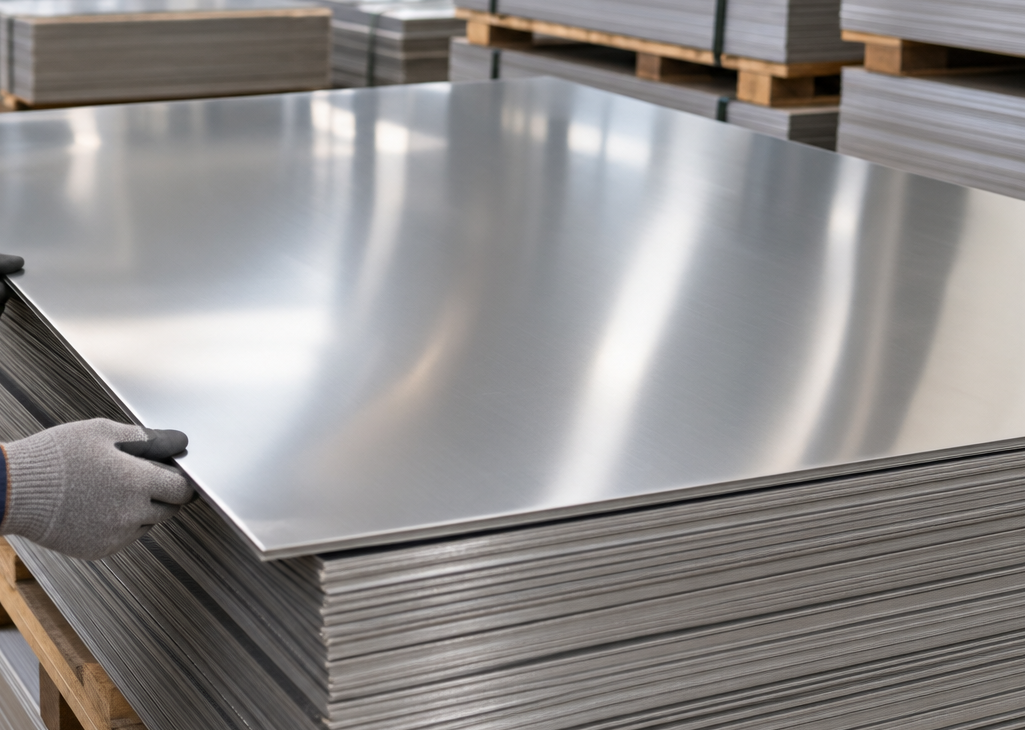
Fabricators use stainless steel sheets for equipment panels, enclosures, process machinery, tanks, covers, architectural components, food-processing equipment, and numerous engineered products. Choosing SS Sheets effectively requires more than specifying length and width because grade, thickness, finish, fabrication process, and end-use conditions can all affect the result.
Industrial buyers in Vadodara often source sheet material for projects serving chemical, pharmaceutical, engineering, food-processing, and manufacturing facilities across Gujarat. Understanding the fabrication requirement before purchasing can help reduce wastage and avoid unsuitable material selection.
Start With the Finished Component
A useful way to select stainless steel sheet is to begin with what will eventually be manufactured.
Ask what operations the sheet will undergo.
These may include:
- Laser cutting
- Shearing
- Bending
- Rolling
- Punching
- Welding
- Polishing
- Surface finishing
The fabrication route can influence the material dimensions, thickness, finish, and handling requirements.
For example, a visible finished panel may have different surface expectations from an internal industrial component.
Choose the Appropriate Grade
The grade should reflect the operating environment and intended application.
A component exposed to corrosive chemicals needs different consideration from a decorative indoor panel. Likewise, equipment used in hygiene-sensitive processing may have specific material and surface requirements.
Buyers should refer to approved drawings, bills of materials, and engineering specifications rather than choosing a grade based only on familiarity.
Thickness Influences More Than Strength
Sheet thickness affects stiffness, weight, forming behaviour, welding, cutting speed, material cost, and the overall design of the finished component.
Ordering material thicker than necessary may increase cost and weight. Material that is too thin may not satisfy mechanical or fabrication requirements.
This makes accurate thickness specification important for both engineering performance and material efficiency.
Surface Finish Should Match the Application
Stainless steel sheets are available with different surface conditions and finishes.
The correct choice depends on whether the surface will remain visible, undergo further processing, be polished after fabrication, or operate in a specific industrial environment.
A buyer should therefore avoid specifying finish as an afterthought.
Protective film requirements may also be relevant where appearance needs to be maintained during cutting, forming, transport, and installation.
Plan Sheet Dimensions Around Fabrication
Standard dimensions may be convenient, but they are not always the most material-efficient option for every component.
Fabricators can compare component nesting with available sheet sizes to understand potential material utilization.
This is especially useful for repetitive production where even modest reductions in scrap can improve overall project economics.
Good planning may reduce:
- Offcuts
- Unusable remnants
- Cutting time
- Handling
- Inventory complexity
Inspect Material Before Fabrication
Incoming inspection helps catch issues before expensive processing begins.
Teams can verify:
- Grade identification
- Thickness
- Sheet dimensions
- Quantity
- Surface condition
- Flatness where relevant
- Documentation requirements
If protective surfaces are important, handling methods should also be reviewed.
Source According to the Complete Requirement
Vadodara has a broad network of engineering manufacturers and process-equipment fabricators serving projects throughout Gujarat and other industrial regions. Material procurement therefore often needs to balance fabrication schedules with technical requirements.
SMD Impex supplies stainless steel products for industrial requirements and can be approached with details covering grade, thickness, dimensions, finish, quantity, application, and documentation expectations.
Selecting sheet material around the finished component is more effective than treating stainless steel purely as a commodity. Grade determines material suitability, thickness affects engineering and fabrication, finish influences appearance and processing, and sheet dimensions can affect wastage.
When these factors are reviewed together, manufacturers can improve material utilization while reducing avoidable procurement and fabrication problems.