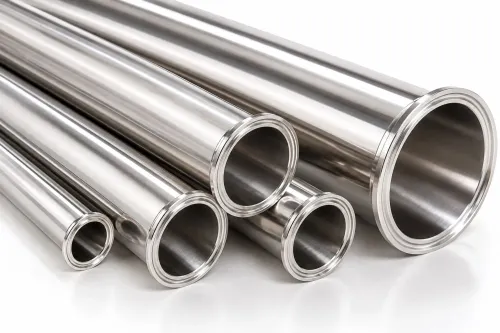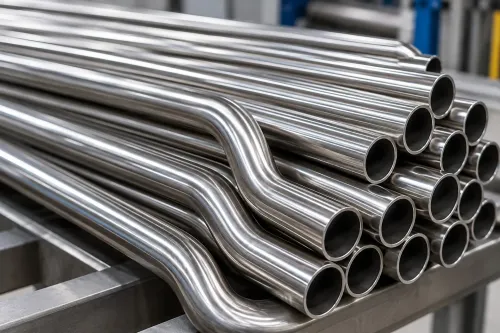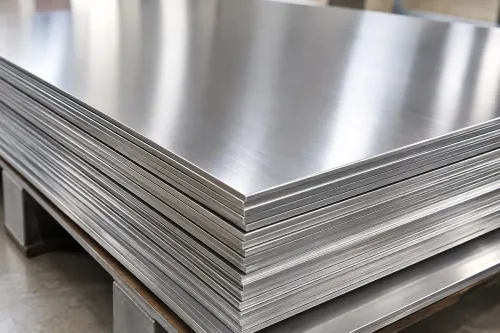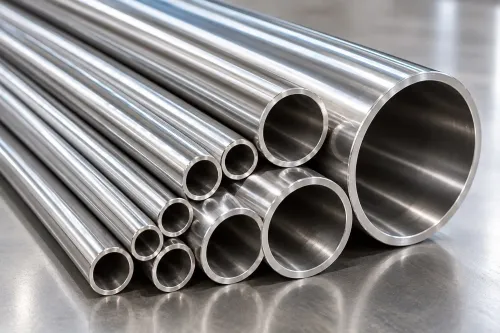
Purchasing SS Pipes for an industrial project can appear straightforward until procurement teams begin comparing grades, schedules, manufacturing routes, specifications, certificates, quantities, and delivery requirements. Two quotations describing stainless steel pipe may represent materially different products.
For engineering companies and EPC contractors working on projects in Vadodara and elsewhere in Gujarat, evaluating these differences before issuing a purchase order can prevent delays and technical mismatches.
Confirm the Material Grade First
Stainless steel is a family of alloys rather than one universal material.
The appropriate grade depends on factors such as:
- Process medium
- Corrosion exposure
- Temperature
- Fabrication requirements
- Project specification
- Cleaning conditions
- External atmosphere
Buyers should use the grade specified by the engineering team rather than selecting material only according to immediate availability.
Define Dimensions Clearly
An enquiry should identify the pipe dimensions in a way that leaves little room for interpretation.
This generally means providing nominal size, schedule or wall thickness, required length, and quantity.
If dimensional tolerances are especially important to fabrication, those requirements should also be communicated.
Clear dimensions help suppliers prepare accurate quotations and help buyers compare equivalent products.
Establish the Manufacturing Requirement
Industrial projects may specify seamless or welded stainless steel pipe according to the application and engineering requirements.
Rather than assuming one manufacturing route is always preferable, buyers should refer to the approved project specification.
The intended pressure, temperature, process conditions, inspection requirements, and applicable standards can influence this decision.
Check the Applicable Standard
Standards provide a common technical basis for material dimensions, manufacturing, testing, and other requirements.
The purchase enquiry should identify the relevant standard whenever one is specified.
This is particularly important for EPC projects where material procurement must align with engineering documentation and client requirements.
Review Documentation Before Ordering
Documentation is often treated as an administrative detail, but for industrial projects it can be an essential part of material acceptance.
Before finalizing the order, clarify what documentation is required.
Depending on the project, this can include material certification and other relevant inspection or testing records.
Early confirmation prevents a situation where technically usable material cannot be accepted because the required supporting documentation is unavailable.
Look Beyond the Lowest Quotation
The cheapest initial quote is not necessarily the lowest-cost procurement decision.
Incorrect grade, incomplete documentation, unsuitable dimensions, poor surface condition, or delayed supply can create costs elsewhere in the project.
A better commercial comparison considers:
- Technical compliance
- Material availability
- Documentation
- Inspection requirements
- Delivery schedule
- Quantity
- Packaging
- Supplier responsiveness to specifications
This gives procurement teams a more realistic picture of the total purchasing decision.
Consider Handling and Storage
Stainless steel material should be handled appropriately before fabrication. Surface contamination, impact damage, inappropriate storage, and mixing of grades can create unnecessary problems.
Buyers receiving material at a project site or fabrication facility should have a basic incoming inspection process.
Check identification, dimensions, quantity, visible condition, and required documentation before moving the material into production.
Build a Complete Enquiry
For buyers in Vadodara's engineering and process-industry market, an effective enquiry can be concise while still technically complete.
Include the grade, size, wall thickness or schedule, manufacturing type where required, length, quantity, standard, application, documentation, and delivery expectations.
SMD Impex supplies stainless steel products for industrial applications and can respond more precisely when these details accompany the initial requirement.
Industrial pipe procurement works best when engineering and purchasing teams are aligned. Defining technical requirements before comparing commercial offers reduces uncertainty and helps ensure that quotations are evaluated on equivalent specifications.
When grade, dimensions, manufacturing route, standards, documentation, and delivery expectations are clear from the beginning, sourcing stainless steel piping becomes significantly more efficient and project-ready.
Keywords