A plate that looks strong on a mill certificate can still fail through pitting, buckling, weld sensitization or inadequate low-temperature toughness. You will be able to define the plate correctly, match the alloy to its environment, calculate the selection inputs and write a purchase specification that controls quality from the mill to fabrication.
Key takeaways
- State plate thickness, dimensions and ASTM product standard in the quotation request.
- Select grades from temperature, corrosion, load and chemical exposure data.
- Calculate thickness from pressure, span, loads and corrosion allowance—not equipment size.
- Specify welding controls, toughness, surface finish and traceability documents.
Define the Plate Before Comparing Grades
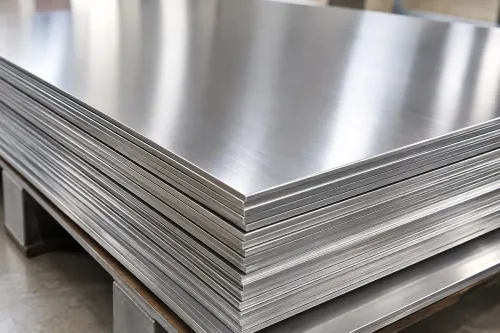
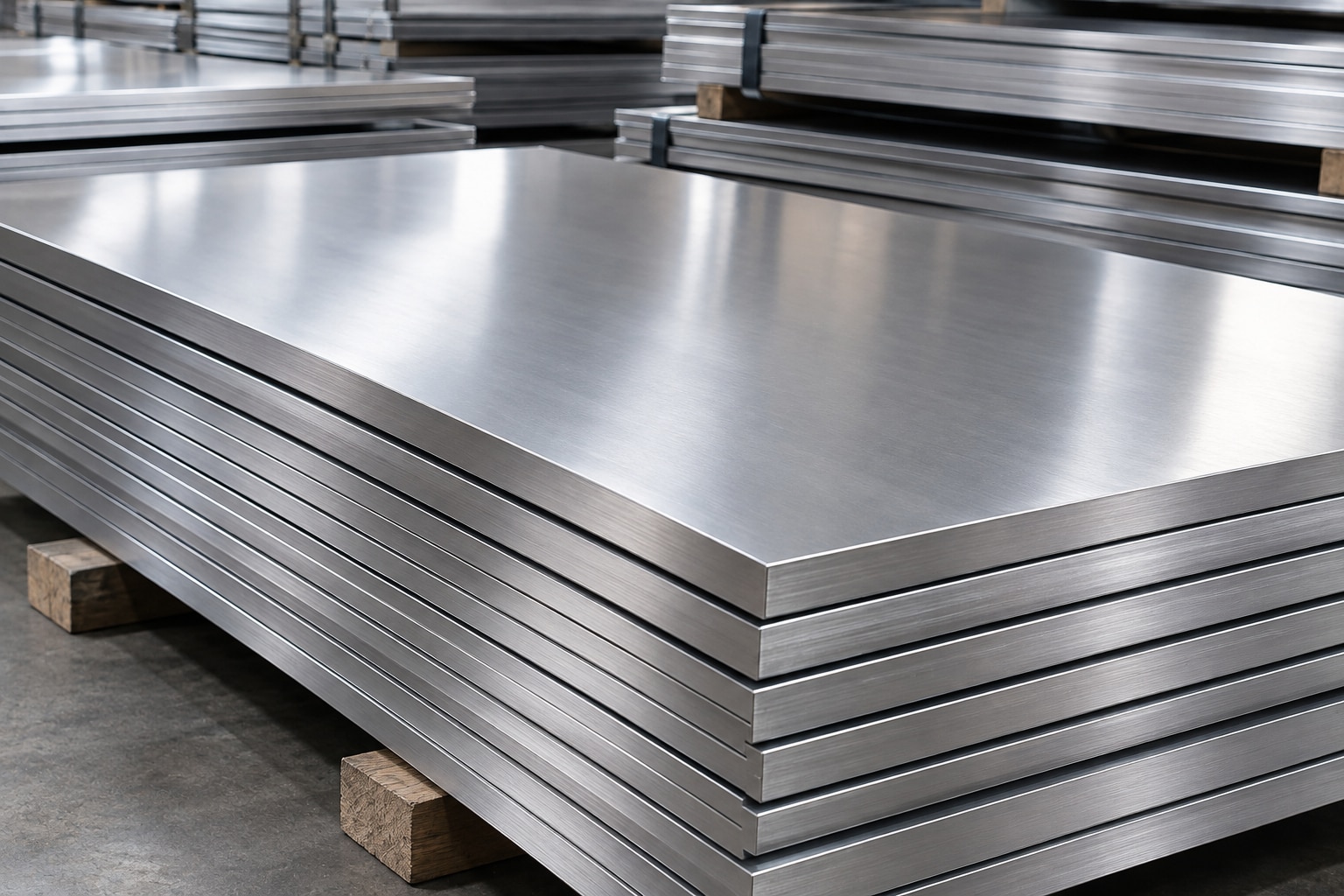
An SS plate is flat stainless steel material sold to a specified thickness, width and length. In this article, ASTM practice treats 3/16 inch plate thickness (4.76 mm) and above as plate; thinner material is treated as sheet. This stainless steel plate versus sheet distinction must appear in the quotation request.
| Detail to settle | Specify this | Why it matters |
|---|---|---|
| Thickness | Nominal thickness and minimum delivered thickness | Mill tolerance can leave the delivered plate below your usable minimum |
| Dimensional standard | ASTM A480/A480M, EN 10088-2 or another named standard | Tolerances for thickness, width, length, flatness and edges differ |
| Product form and finish | Hot rolled and descaled, cold rolled, cut to size, No. 1 or 2B | Rough No. 1 surfaces retain more deposits and need more cleaning than 2B |
State the standard governing ASTM A480/A480M plate dimensions, not simply “standard size.” Confirm whether lengths and widths are mill sizes or cut sizes, and define edge condition: sheared, saw-cut, machined or rounded.
Your request must also name the UNS designation, grade suffix such as 304L or 316L, heat-treatment condition and required surface condition. “SS plate” is not a complete specification; it leaves the supplier free to quote materially different products.
Match the Grade to the Actual Service Environment
Choose 304L for many general fabrication duties, but choose 316L when chlorides, salt contamination or process-water deposits create pitting and crevice risk. In a 304 versus 316 stainless plate comparison, 316L typically contains 2–3% molybdenum, while 304 has no intentional molybdenum; that difference improves 316L chloride resistance.
Do not treat 316L as a universal seawater grade: stagnant or continuously immersed seawater can still attack it.
PREN is a screening comparison, not a service-life guarantee. Typical values are about 24 for 316L, about 35 for duplex 2205 and above 40 for many super-duplex grades. Check temperature, deposits, crevices, weld zones and surface condition as well.
| Grade | Best starting point | Main caution |
|---|---|---|
| 304L | General fabrication | Poorer chloride pitting resistance |
| 316L | Chloride-bearing process water | Not universal seawater protection |
| Duplex 2205 | Higher pitting resistance and strength | Requires qualified fabrication controls |
| 321 or 347 | Welded equipment at elevated temperature | Confirm temperature and exposure duration |
| 310S | Oxidizing high-temperature service | Check creep, oxidation, carburization and thermal cycling |
For duplex 2205 plate selection, use the qualified welding procedure and design code, not PREN alone. For sulfuric acid, nitric acid, caustic service, cryogenic duty or wet-dry cycling, consult concentration-temperature diagrams and compatibility data. Confirm the governing code before approval. Steels 321 and 347 address carbide precipitation control; 310S requires time-at-temperature data.
Choose Thickness from Loads, Not Equipment Size
Plate thickness is determined by load path and code equations, not equipment size. Start with pressure, unsupported span, external vacuum, bending, impact, vibration, fatigue cycles and buckling mode. For pressure vessels, identify the construction code, design temperature, joint efficiency and non-destructive examination category before approving a plate thickness calculation.
Let the governing code’s allowable design stress or design resistance control; material strength alone cannot replace it.
- Check stainless steel plate yield strength, tensile strength, elongation, hardness and impact toughness against the design temperature and service risk.
- Add corrosion allowance only for predictable general wall loss. Calculate wear allowance, machining allowance, mill tolerances and fabrication thinning separately; a small chloride pit can penetrate locally despite added thickness.
- Treat elastic buckling, fatigue cracking and weld failure as separate design checks. A thicker plate does not automatically prevent any of them.
| Grade | ASTM A240 minimum room-temperature yield strength | Design implication |
|---|---|---|
| 316L plate | About 170 MPa | Lower strength can require more thickness for the same load |
| UNS S31803/S32205 duplex 2205 plate | About 450 MPa | Higher strength can reduce weight, but not thickness without code checks for buckling, fatigue, weld design, corrosion allowance and minimum practical thickness |
Control Welding, Toughness and Surface Condition
A correct grade and thickness can still fail after fabrication: heat tint, poor joint design, weld defects, iron contamination and chloride exposure create localized corrosion or cracking. 304L and 316L low carbon grades reduce chromium-carbide precipitation and sensitization after welding, but L grades do not remove those other risks.
| Grade or option | Main fabrication control | Limitation |
|---|---|---|
| 304L or 316L | Low carbon for welded construction | Does not replace cleaning or chloride-resistant design |
| 321 versus 347 stainless plate | Stabilized chemistry for prolonged elevated-temperature service | Select against the actual temperature and thermal cycle |
| Duplex plate | Qualified procedure for the actual thickness and joint | Sigma or chi phases and poor phase balance reduce toughness and corrosion resistance |
For duplex welding requirements, control heat input, interpass temperature, cooling rate and ferrite-austenite balance. Excessive heat, very slow cooling or unsuitable post-weld heat treatment can form harmful intermetallic phases.
For cryogenic impact toughness stainless steel, specify the test temperature, absorbed-energy requirement and sampling direction. Do not infer toughness from tensile strength; weldments and thick sections can control the result.
Define these fabrication safeguards in the specification:
- Dedicated stainless tools, segregated worktables, clean slings and permitted abrasives
- Pickling and passivation, or an equivalent controlled cleaning process, after welding
- Removal of heat tint, grinding debris and embedded carbon steel before service
Choose the finish for the cleaning burden. Rough No. 1 plate retains more deposits than smoother 2B material, but polishing cannot compensate for an under-alloyed grade.
Write a Checkable Purchase Specification
Specify the purchase by document and acceptance criteria, not by “316L plate” alone. The schedule must identify the governing material standard, grade, UNS number, dimensions, finish, heat-treatment condition, tolerances, tests and traceability.
| Standard | What to specify | Document or verification |
|---|---|---|
| ASTM A240/A240M stainless steel plate | Grade, UNS number, thickness, dimensions, finish and heat-treatment condition | Mill test certificate and plate marking |
| ASTM A480/A480M | Thickness, width, length, flatness, edges and permitted tolerances | Dimensional inspection report |
| EN 10088-2 | Use when the project governs European material requirements | Certificate to the specified EN grade and condition |
| ASME SA-240 plate documentation | Use with the applicable ASME BPVC construction code | Code-compliant certificate and supplementary results |
For thick or safety-critical plate, add these purchase requirements:
- Tensile strength, yield strength, elongation, test temperature and sampling direction.
- Impact energy at the specified temperature when cryogenic or impact-critical service applies.
- Heat-treatment records, including furnace condition or solution-annealing details.
- Ultrasonic examination to ASTM A578/A578M, with the acceptance level stated, such as Level B; require ASTM A770/A770M through-thickness testing when specified by design.
- Full heat-to-plate traceability: the heat number on the certificate must match the plate marking.
Ask for the mill test certificate before release and verify every marking against it. Give SMD Impex and every competing supplier the same technical schedule so quoted prices compare equivalent material, inspection and documentation.
Frequently asked questions
How do you define an SS plate before comparing grades?
State that you need plate rather than sheet, using the required thickness, width, length and product standard. ASTM practice treats 3/16 inch (4.76 mm) and above as plate.
How do you choose the stainless steel grade for service conditions?
Match the grade to the actual temperature range, chemicals, chloride exposure, corrosion risk, mechanical loads and fabrication method. Do not choose by grade name alone.
How do you determine the required plate thickness?
Base thickness on pressure, span, support conditions, applied loads, design temperature and corrosion allowance. Equipment size alone does not determine thickness.
What welding, toughness and surface details belong in the specification?
Specify the welding procedure, filler compatibility, heat input controls, toughness requirements, surface finish, inspection needs, heat number and material test documentation.