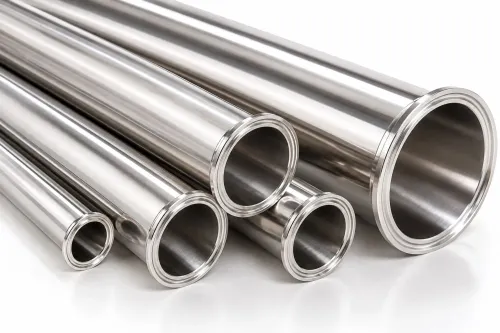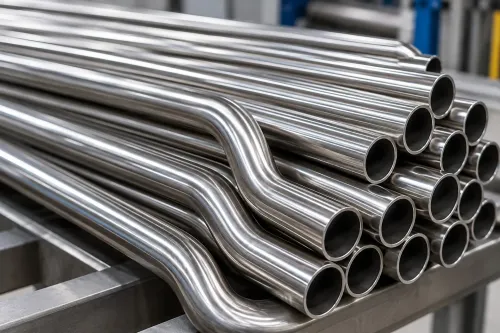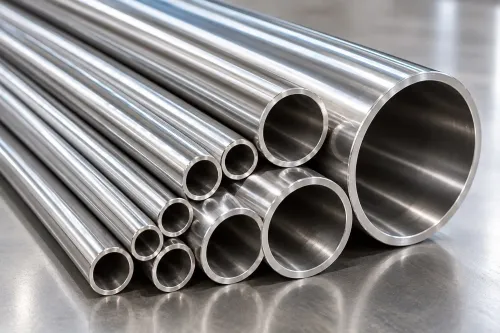
A high-pressure hydraulic tube is only one part of a pressure boundary that includes the pump, valves, actuator, accumulator, manifold, fittings, and return line. By the end, you will be able to compare tube dimensions, grades, construction, pressure ratings, fittings, installation methods, and inspection records before approving a hydraulic tube specification.
Key takeaways
- Match tube outside diameter and wall thickness to pressure and flow requirements.
- Choose seamless tube for demanding pressure boundaries and welded tube for suitable applications.
- Use compatible fittings, clean tube ends, and correct tightening methods to prevent leaks.
- Verify material traceability, dimensions, pressure rating, and test records before installation.
How the Complete Hydraulic Circuit Carries Pressure
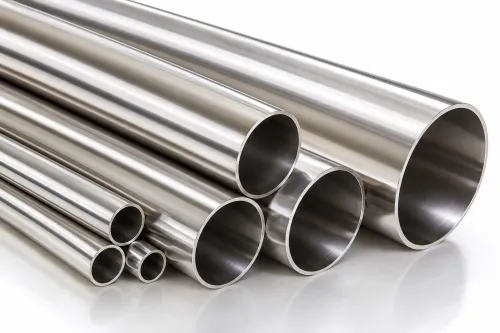
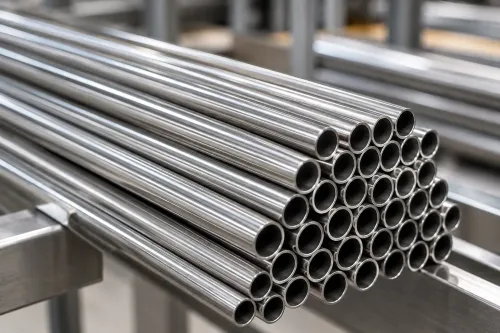
A stainless steel tube forms the pressure boundary that carries hydraulic fluid between the pump, valve, manifold, fittings, and actuator. The pump generates flow and pressure; the valve directs that flow through the actuator pressure line, while the return line carries fluid back to the reservoir at its own pressure.
An accumulator can add stored pressure, and every connection must withstand the local load.
| Pressure figure | What it means | Why it matters |
|---|---|---|
| Working pressure | The highest continuous or normal operating pressure | Size the tube, fittings, supports, and components for this condition |
| Proof pressure | A specified test pressure applied without unacceptable leakage or permanent deformation | Demonstrates test integrity; it is not the normal operating limit |
| Burst pressure | Pressure at which the tube or assembly ruptures | Provides a safety margin, but does not predict service life |
| Pressure-cycle performance | Resistance to repeated pressure changes, pulsation, and vibration | Controls fatigue life in pump and valve circuits |
Use the complete circuit’s maximum pressure, including startup spikes, blocked-flow conditions, accumulator discharge, and actuator loads—not only the pump’s average gauge reading. A tube that survives a static proof test can still crack after millions of pressure cycles if unsupported spans transmit pump pulsation or valve shock into its fittings.
ASTM A269/A269M or ASTM A213/A213M identifies tubing categories, not a complete hydraulic pressure rating. State the outside diameter, wall thickness, stainless grade, condition, testing, and applicable piping or equipment code before accepting a rating.
How Tube Size and Stainless Grade Change System Performance
Start with bore sizing, because a small bore raises velocity and pressure drop; an oversized bore adds weight, cost, and fluid volume. Select the tube outside diameter to match the fittings, valves, clamps, and available installation space.
Then choose wall thickness from the required pressure, minimum wall after tolerance and corrosion allowance, operating temperature, cyclic loading, and external loads—not from nominal thickness alone.
| Option | Performance effect | Choose it when |
|---|---|---|
| 304/304L stainless | Good general corrosion resistance; lower cost than 316/316L | Hydraulic oil, clean water, and indoor service without significant chlorides |
| 316/316L stainless | Better resistance to chlorides, salt spray, and many process chemicals; still vulnerable to severe pitting | Marine exposure, coastal plants, or chloride-bearing fluids |
| Thicker wall | Increases pressure capacity and resistance to dents, but reduces bore and increases weight | High pressure, corrosion loss, unsupported handling, or mechanical damage risk |
| Larger outside diameter | Permits a larger bore at a given wall thickness and reduces velocity | High flow where pressure drop must stay low and installation space permits |
Use allowable stress at operating temperature under the governing code, such as ASME B31.3; do not treat yield strength as working pressure. A thin-wall hoop-stress equation is only a preliminary check. Confirm minimum wall, temperature derating, weld efficiency where applicable, pressure-cycle fatigue, and fitting and valve ratings.
The ferrule must match the actual tube outside diameter, wall thickness, hardness, roundness, and surface condition.
When Seamless or Welded Tube Is the Better Pressure Boundary
Seamless hydraulic tube is the safer default when a longitudinal weld defect, severe forming, or difficult cleaning would carry unacceptable consequences. A welded hydraulic tube can perform equally well in pressure service when weld quality, heat treatment, nondestructive examination, dimensions, and pressure testing are controlled. Seamless is not automatically required.
| Option | Pressure-service position | When it fits |
|---|---|---|
| Seamless hydraulic tube | No longitudinal weld; useful where defect consequences or forming demands justify its cost | High-consequence circuits, tight bends, demanding cleanliness, or severe cyclic service |
| Welded hydraulic tube | Acceptable when the weld and final tube condition meet the specified controls | Cost-sensitive systems with qualified production, inspection, and pressure-test records |
Specify the actual outside diameter and wall thickness, not a pipe nominal size or schedule. A schedule substitution can misfit tube fittings and invalidate pressure calculations. State the stainless grade, heat-treatment condition, hardness or temper limits, surface finish, straightness, ovality, end preparation, cleanliness, and required delivery documents.
ASTM A269/A269M covers general-service seamless and welded austenitic stainless tubing. ASTM A213/A213M covers seamless ferritic and austenitic alloy-steel boiler, superheater, and heat-exchanger tubing. Neither standard alone supplies a complete hydraulic pressure rating.
Add the applicable piping or equipment code, design pressure and temperature, proof or leak test, nondestructive examination, and material test certificate requirements to the purchase specification.
How Tube Ends, Fittings, and Installation Prevent Leaks
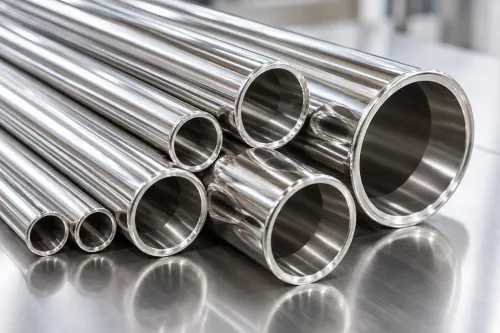
A fitting seals only when its bore, geometry, and gripping method match the tube. Confirm the actual tube outside diameter, wall thickness, material hardness, roundness, and tube OD tolerance before choosing 24-degree cone fittings or bite-type fittings.
Do not substitute nominal pipe size or schedule: metric versus imperial tube dimensions are not interchangeable, even when they appear close.
Prepare each end with a square cut and a smooth deburr. Remove chips, slivers, and any inward-projecting burr that could restrict flow or damage a pump, servo valve, proportional valve, or seal. Clean and flush the tube; an ISO 4406 fluid code does not replace a tube-cleaning specification.
Follow the fitting manufacturer’s fitting assembly procedure, including insertion depth, ferrule position, nut tightening, and any required pre-assembly. Do not mix ferrules, nuts, or bodies from different systems. Stainless threads can gall, so use compatible plated components or approved anti-seize only when the fluid and cleanliness requirements allow it.
Install the run so the tube is not forced into alignment with a fitting. Use supports close enough to control pulsation, avoid unsupported spans, and leave room for thermal movement; wall thickness alone will not stop vibration fatigue.
- Keep bends gradual and outside the manufacturer’s minimum radius.
- Prevent pump and valve loads from entering the tube.
- Check that fittings do not reduce the intended flow passage.
- Inspect every joint after assembly for misalignment, tool marks, and leakage.
SMD Impex can help you verify tube dimensions and documentation before fittings are ordered, preventing an expensive mismatch at installation.
Related product
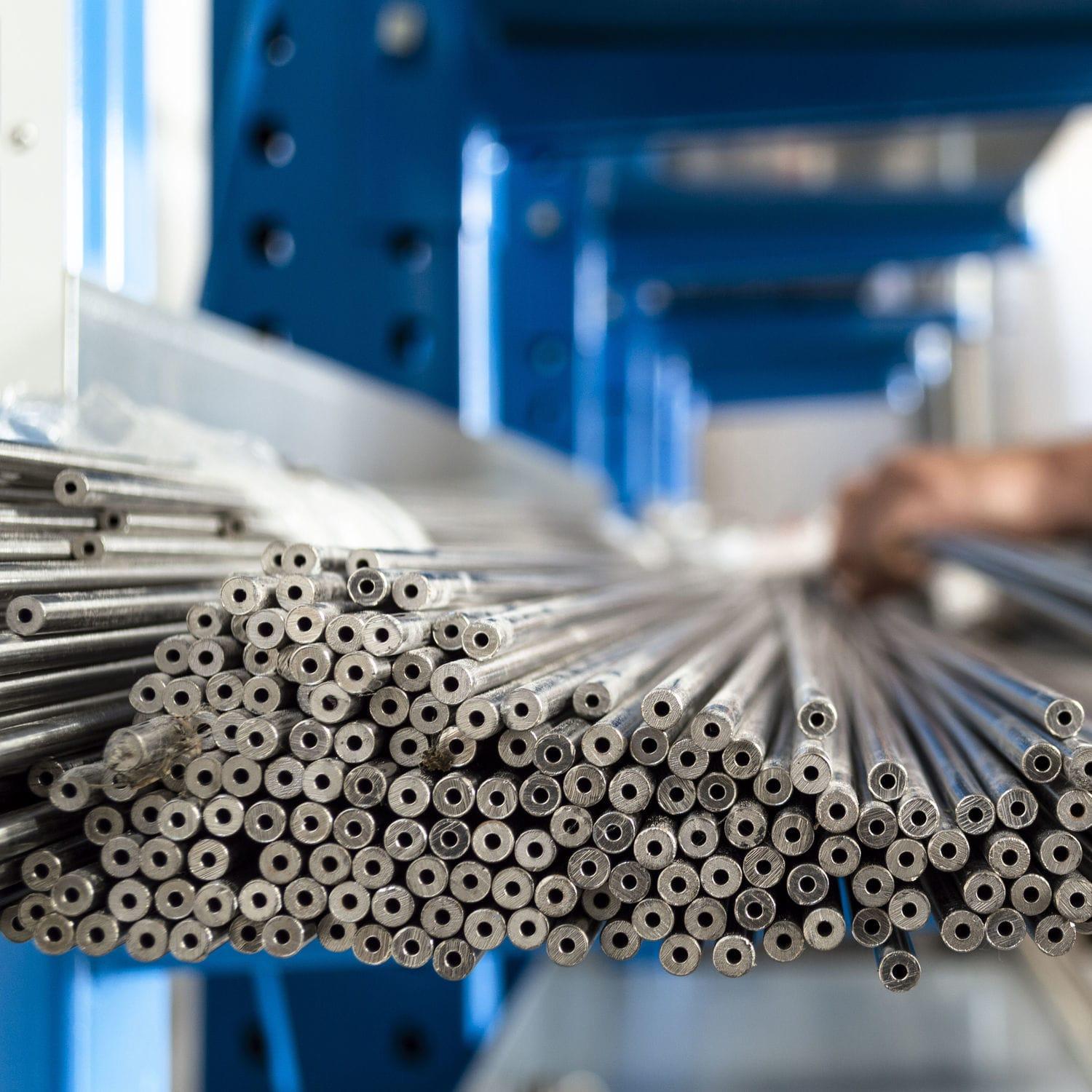 | Stainless Steel Hydraulic Tubes Stainless Steel Hydraulic Tubes Stainless Steel Hydraulic Tubes are engineered for high-pressure hydraulic and pneumatic applications where strength, corrosion resistance, and... View product → |
What to Verify Before a High-Pressure Tube Enters Service
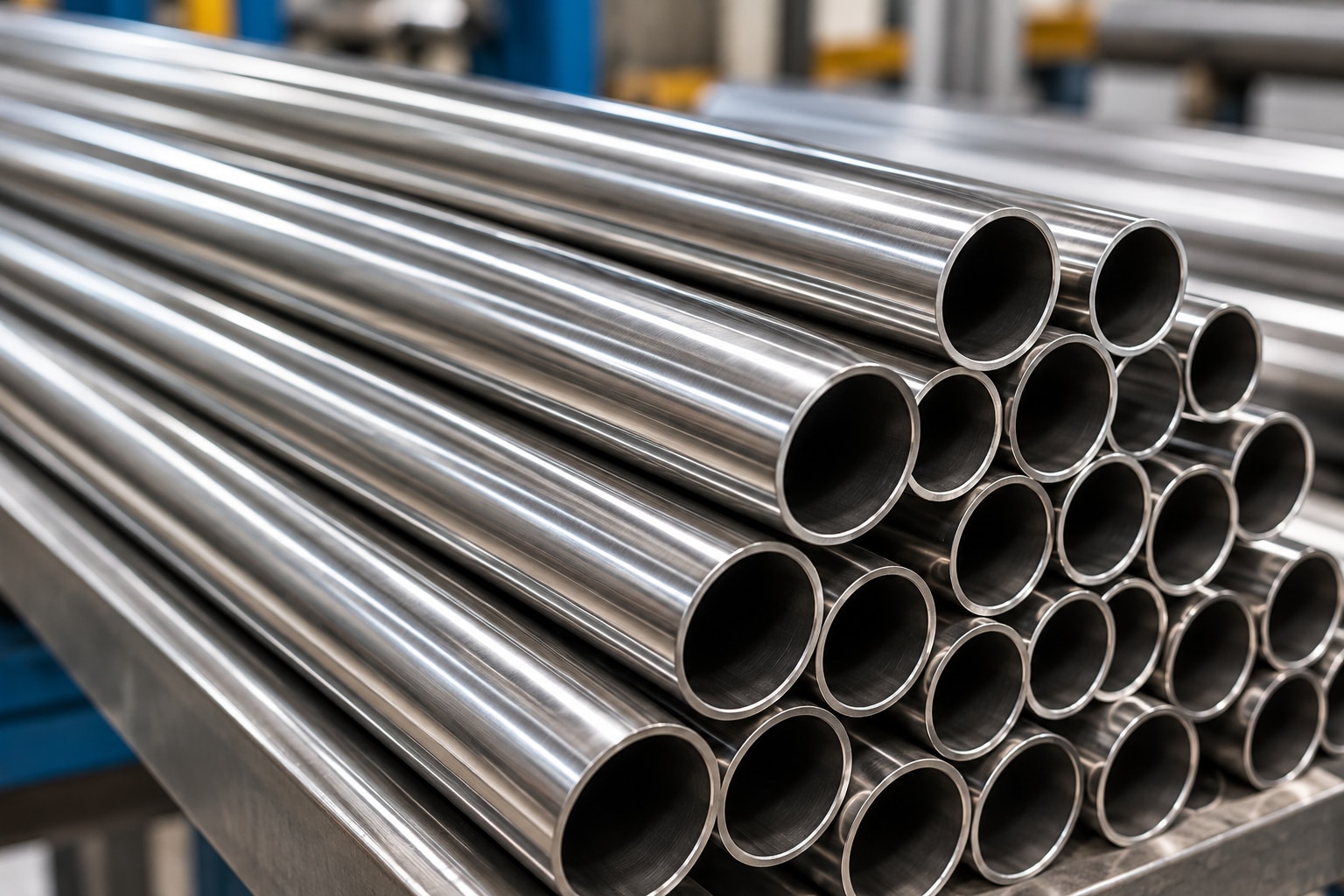
Do not release the assembly from quarantine until its heat number, tube grade, dimensions, fitting specification, and material test certificate match the purchase order. Inspect each end for a square cut, full deburring, no inward-projecting burr, clean threads, correct insertion depth, and marks or damage from bending.
A magnet is not a grade test; confirm 304/316 chemistry through certification or laboratory analysis.
Check the evidence against what it actually proves:
| Check | Demonstrates | Does not demonstrate |
|---|---|---|
| Material test certificate | Heat traceability, chemical composition, mechanical results | Correct installation or cleanliness |
| Hydrostatic pressure test | Leakage and gross pressure integrity at the specified test condition | Fatigue life, chloride resistance, supports, or fitting assembly |
| ISO 4406 result | Particulate contamination level in the hydraulic fluid | Tube cleanliness and flushing |
- Require a documented tube cleanliness and flushing procedure stating cleaning chemistry, particle limits, drying, preservation, and end-cap packaging. For oxygen or high-purity service, define hydrocarbon residue limits and passivation; commercial degreasing alone is not enough.
- Record the hydrostatic pressure test medium, pressure, hold time, calibrated gauge, temperature, and acceptance result. Use pneumatic testing only under a controlled safety procedure because stored gas energy makes a failure more hazardous.
- Verify support spacing, bend geometry, vibration restraint, fitting torque or assembly marks, and the design pressure-cycle calculation separately. A passing pressure test is one acceptance check, not complete design verification.
Frequently asked questions
How does a complete hydraulic circuit carry pressure?
The pump creates flow and pressure, valves direct fluid through the actuator pressure line, and the return line carries fluid back to the reservoir at its own pressure.
How do tube size and stainless steel grade affect hydraulic performance?
Tube diameter and wall thickness affect flow capacity, pressure containment, pressure loss, and installation space; the stainless grade affects corrosion resistance, strength, and compatibility with the fluid and environment.
When is seamless tube better than welded tube for hydraulic service?
Seamless tube is the safer choice for demanding pressure boundaries and severe service. Welded tube suits applications where its specification, weld quality, and pressure rating meet the design requirements.
How do tube ends, fittings, and installation prevent hydraulic leaks?
Use correctly prepared tube ends, fittings rated for the system pressure, compatible materials, proper alignment, and the manufacturer’s tightening procedure.
What should you verify before a high-pressure tube enters service?
Check the material grade, dimensions, wall thickness, heat or batch traceability, pressure rating, surface condition, cleanliness, fitting installation, and required pressure-test records.