

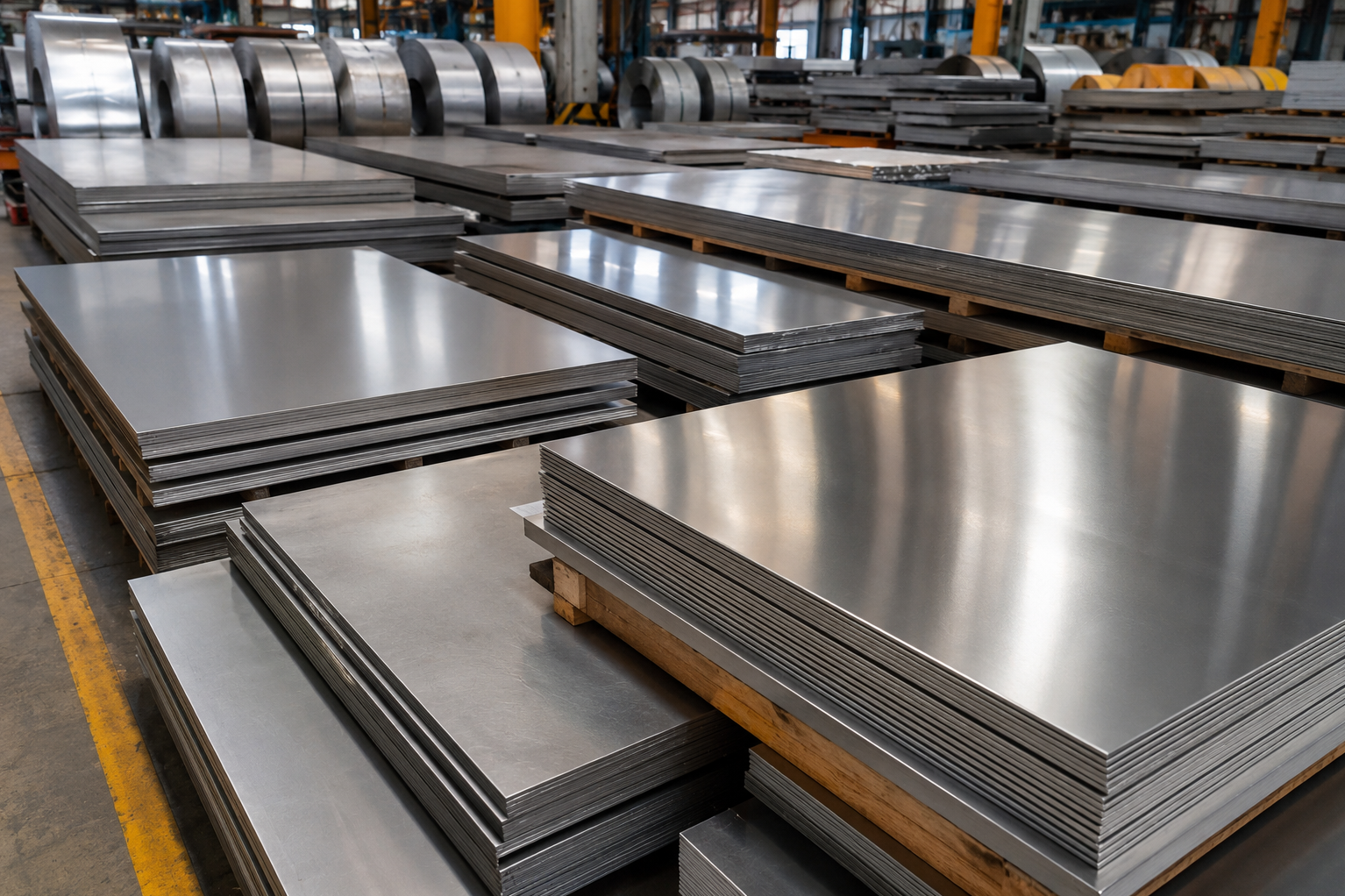
The quality of stainless steel fabrication begins with suitable raw material. Incorrect thickness, an unsuitable finish or inconsistent dimensions can lead to excessive scrap, bending problems, visible defects and delayed production.
SMD Impex supplies SS sheets and plates in Ahmedabad for industrial equipment, architectural work, food-processing systems and general engineering applications. Buyers can improve procurement outcomes by sharing fabrication details and evaluating the complete supply offer rather than comparing only the basic material rate.
Define the Finished Component First
Before requesting a quotation, buyers should identify how the material will be processed. A sheet intended for a decorative panel has different requirements from a plate used as a machine base or pressure-equipment component.
Useful information includes:
- Finished component dimensions
- Cutting method
- Number and type of bends
- Welding requirements
- Load-bearing expectations
- Exposure to moisture or chemicals
- Required visual finish
- Quantity of finished components
This information helps determine the appropriate grade, thickness, sheet size and surface condition.
Choose Between Sheet and Plate Carefully
Sheets are commonly used for enclosures, panels, kitchen equipment, cladding and light fabricated components. Plates are suited to heavier parts, tanks, platforms, flanges and structural assemblies.
Ordering plate where sheet would meet the requirement can increase weight, cost and processing time. Selecting sheet for a heavy-duty application may create strength or rigidity concerns.
The required thickness should follow design calculations and approved fabrication drawings.
Evaluate Grade and Finish Together
SS 304 is frequently selected for general engineering, food equipment and indoor applications. SS 316 offers improved resistance in several chloride-bearing and chemically aggressive conditions.
Surface finish should also match the finished product. A 2B finish is practical for many industrial applications, while a No. 4 brushed finish is often used for visible surfaces. Mirror-polished material may be needed for specialised decorative work.
When a directional finish is specified, the component layout should account for grain direction. Incorrect nesting can cause adjoining panels to reflect light differently after installation.
Calculate Usable Material and Scrap
Price per kilogram is only one part of the purchasing decision. Standard sheet sizes may produce significant offcuts if they do not align with the component dimensions.
Fabricators can improve material utilisation by preparing a cutting plan before ordering. The plan should consider:
- Component dimensions
- Cutting clearance
- Edge trimming
- Grain direction
- Defective-area allowance
- Reusable offcuts
- Machine-bed dimensions
A slightly different sheet size may reduce scrap enough to offset a higher unit rate.
Assess the Supplier’s Quotation
A complete quotation should state the grade, thickness, dimensions, finish, quantity, weight basis and delivery schedule. Protective film, testing documents and cutting services should be identified separately where applicable.
For plate requirements, buyers may also need to confirm thickness tolerance, flatness, surface condition and material traceability. These points become particularly important for machined or code-governed components.
Procurement Support in Ahmedabad
Ahmedabad has a broad network of engineering workshops, equipment manufacturers and architectural fabricators. Reliable supply depends on accurate communication between design, procurement and production teams.
SMD Impex works with buyers to identify SS sheets and plates according to their stated fabrication requirements. Providing drawings, cut sizes and surface expectations can help the team prepare a more relevant offer.
Submit your grade, thickness, dimensions, finish and quantity to SMD Impex for SS sheet and plate requirements in Ahmedabad. A detailed enquiry can support accurate pricing, efficient material planning and timely fabrication.