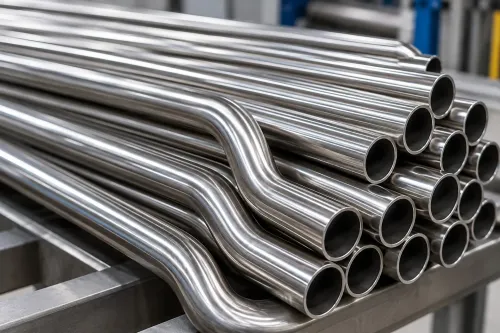
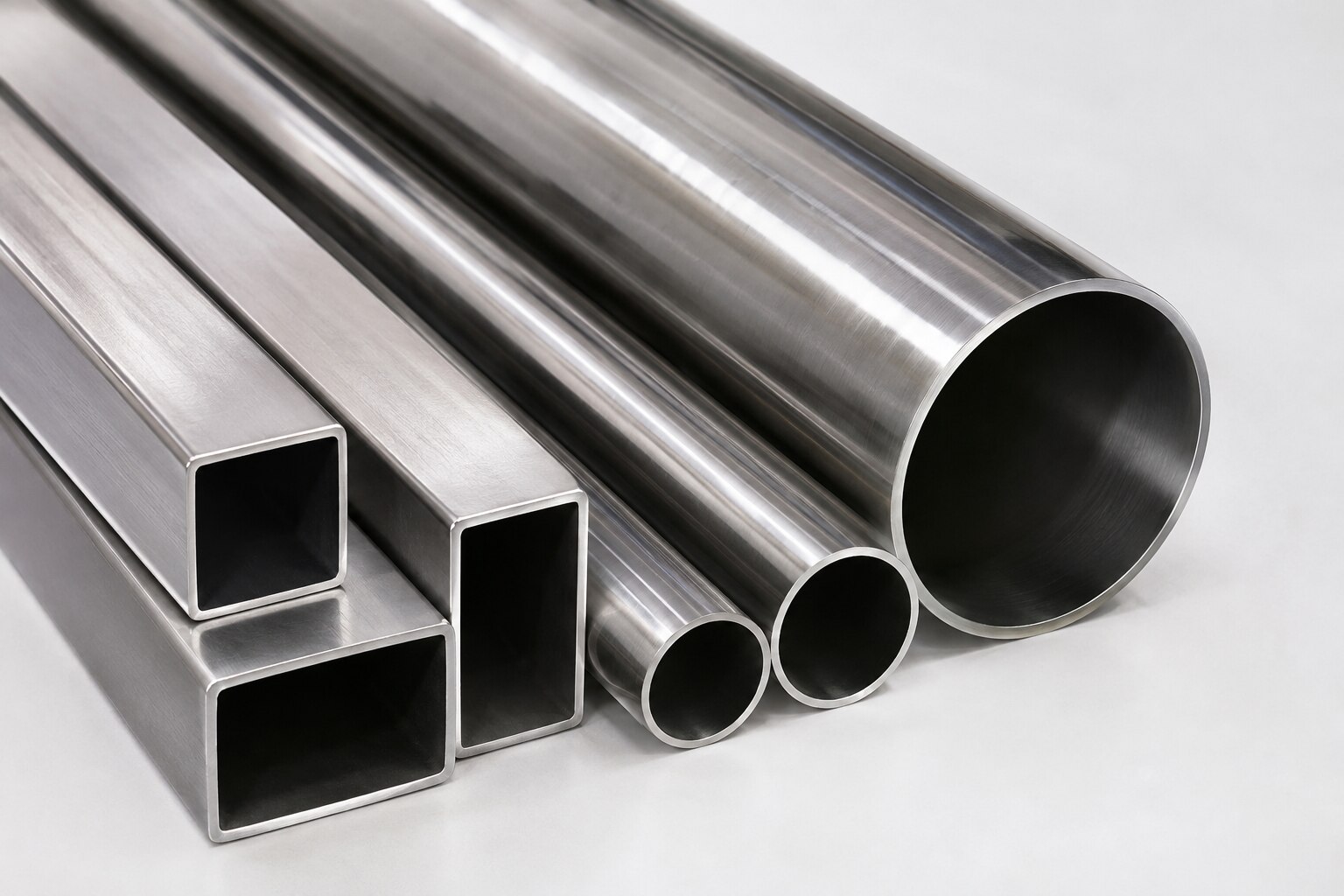
Choose SS Tubes from the service conditions outward, not from an outside diameter or price per kilogram alone. By defining the fluid, pressure, temperature, grade, dimensions, manufacturing route, finish and inspection package first, you can compare quotations on usable technical value and avoid costly fabrication failures.
Key takeaways
- Define pressure, temperature, fluid, size and tolerances before requesting a quote.
- Choose grades such as 304L, 316L or duplex stainless steel by exposure.
- Select seamless or welded tubes according to duty, geometry and inspection requirements.
- Compare suppliers using mill certificates, test reports, traceability and delivery commitments.
Start with the Service Conditions and the Correct Size Definition
Before requesting a quotation, define the duty and the exact product geometry; “SS Tubes” is not a sufficient description. A supplier needs conditions that determine material, wall thickness, manufacturing route and inspection level.
- State the fluid, concentration, contaminants, chloride exposure, corrosion environment and whether the tube carries a product, utility or cleaning chemical.
- Give design and operating pressure, minimum and maximum temperature, vacuum conditions, cyclic loading and any erosion or vibration concerns.
- Specify tube outside diameter, wall thickness, straight length or cut length, dimensional tolerances and required bend radius. Do not use nominal pipe size and schedule unless the connection is actually pipe; tube is normally ordered by actual OD and wall.
- Describe the joining method: orbital welding, manual TIG, compression fitting, flaring, tube expansion or brazing. Include end preparation, bend requirements and access limitations.
- Name the product standard, design code, inspection coverage and documents required, such as material certificates, hydrostatic testing, eddy-current testing, weld examination and dimensional reports.
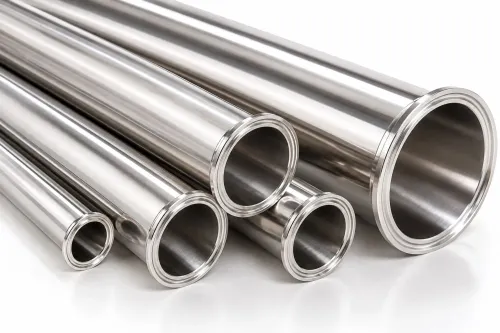
For sanitary service, add the product-contact roughness limit, weld-bead condition, drainability, crevice restrictions, passivation or electropolishing, end finish and packaging. Ra 0.8 µm maximum is a common hygienic requirement, but use the governing standard or user specification rather than assuming that “sanitary” defines it.
This detail prevents a low quotation from becoming an unusable tube after fabrication.
Match the Stainless Steel Grade to Corrosion and Temperature
Choose 304/304L for ordinary atmospheric, water and food-processing service; choose 316/316L when chlorides, salt spray or process chemicals increase localized-corrosion risk. Select a higher-alloy grade only after matching the actual chemistry, temperature and stress to corrosion data.
| Grade | Corrosion and fabrication position | Choose it when |
|---|---|---|
| 304/304L | Baseline austenitic grade; 304L limits weld sensitization | The fluid is non-chloride and exposure is moderate |
| 316/316L | Molybdenum improves pitting and crevice-corrosion resistance; 316L is safer after welding | Chlorides, marine exposure or many process chemicals are present |
| Duplex 2205 | Higher strength and better chloride stress-corrosion-cracking resistance than 304L or 316L | You need thinner walls, lower support loads or stronger chloride resistance |
| 904L, 6Mo or another higher alloy | Greater resistance for aggressive combined acid, chloride or high-temperature service | 316L fails documented compatibility checks and the design standard permits the grade |
The “L” designation reduces chromium-carbide sensitization after welding; it does not excuse poor shielding, heat tint, carbon-steel contamination or inadequate pickling and passivation. Neither 304L nor 316L is chloride-proof: temperature, concentration, deposits and crevices can still cause pitting.
Use PREN = %Cr + 3.3(%Mo) + 16(%N) as a screening comparison, not a service-life prediction. For Stainless Steel Tubes, request positive material identification and a heat-specific EN 10204 3.1 or 3.2 certificate showing chemistry, mechanical results, heat treatment and bundle traceability. Confirm duplex welding controls before approving fabrication.
Choose Seamless, TIG-Welded or Other Welded Construction
Seamless construction justifies its added cost when a weld discontinuity presents unacceptable risk: high-pressure or high-temperature service, severe cyclic loading, difficult-to-inspect small-bore tubing, or a specification that explicitly requires seamless product. It does not automatically provide better corrosion resistance; alloy chemistry, heat treatment, surface condition and operating environment matter more.
| Option | Strength | When it applies |
|---|---|---|
| Seamless | No longitudinal weld; consistent pressure boundary | Critical pressure service, severe cycling, or a customer standard requiring seamless construction |
| TIG-welded | Controlled longitudinal weld with a narrow heat-affected zone | General fabrication, instrumentation and process service when weld inspection and solution annealing are specified |
| Other welded | Product made with an approved longitudinal welding process | Larger diameters or cost-sensitive systems where the qualified weld meets design and inspection requirements |
Welded tube is sufficient when pressure, temperature and fatigue calculations permit it and the manufacturer provides a qualified weld, suitable nondestructive examination and proper solution annealing.
For welded austenitic Industrial SS Tubes, specify 304L or 316L when welding could cause sensitization; the L grade does not correct heat tint, poor shielding, carbon-steel contamination or inadequate pickling and passivation.
State the exact product standard rather than ordering “SS tube” alone. ASTM A269/A269M covers general-purpose seamless and welded austenitic tubing; ASTM A213/A213M covers seamless boiler and heat-exchanger tubing, while ASTM A249/A249M covers welded heat-exchanger tubing. Include actual outside diameter, wall thickness, tolerance and length.
Specify Heat Treatment, Finish, Standards and Inspection
Put the manufacturing condition, finish, standard and inspection documents directly into the purchase specification; “316 stainless tube” is not enough.
| Requirement | Specify | Why it matters |
|---|---|---|
| Condition | Solution annealed, pickled, bright annealed or as-welded; include post-bending treatment for U-shaped tubes | Incorrect treatment can leave residual stress, poor corrosion resistance or excessive hardness |
| Finish | 2B, bright annealed, mechanically polished, or product-contact Ra 0.8 µm maximum | Surface defects and crevices increase cleaning and corrosion problems |
| Standard | ASTM A269, A213, A249, A270, A789, EN 10216-5 or EN 10217-7, with the ASME SA equivalent where required | Each standard sets different dimensional, testing and heat-treatment rules |
| Inspection | Hydrostatic or eddy-current testing, weld examination, PMI, dimensions and visual inspection; state full-length or sample coverage | A material certificate alone will not reveal every discontinuity |
Name the required certificate in the order. EN 10204 Type 3.1 provides heat-specific chemical and mechanical results; Type 3.2 adds independent or purchaser inspection. Request the heat number, analysis, heat treatment, test results and traceability to the delivered bundle.
For sanitary SS Tubes, specify internal finish, weld-bead condition, passivation, drainability, orbital-weld compatibility, end protection and packaging. For U-bends, add bend radius, wall thinning, ovality, tooling marks and post-bend NDE limits. Require the applicable acceptance criteria and repair rules rather than accepting “tested” as a complete inspection statement.
Compare SS Tubes Suppliers on the Complete Technical Package
A quote that is 8% cheaper per kilogram can cost more if it includes shorter usable lengths, wider tolerances, less inspection or higher rejection risk. Evaluate each SS Tubes Supplier against the delivered technical package, not the metal rate alone.
| Criterion | Ask the supplier to state | Why it affects value |
|---|---|---|
| Standard and form | ASTM A269/A269M, A213/A213M, A249/A249M or A270/A270M; seamless or welded; grade and dimensions | A general tubing standard is not automatically suitable for heat exchangers or sanitary service. |
| Dimensions | Outside diameter, wall thickness, tolerance, straightness and guaranteed usable length | Off-size or bowed Stainless Steel Tubes can delay bending, fit-up and installation. |
| Testing | NDE method, pressure test, test pressure and inspection extent | Limited testing transfers leak and rejection risk to your workshop. |
| Surface and condition | Heat-treatment condition, finish, internal weld-bead condition and passivation where specified | Roughness, heat tint and contamination can create corrosion or cleaning problems. |
| Documents and identity | Heat number, chemical analysis, mechanical results, treatment record, PMI and EN 10204 3.1 or 3.2 certificate | A generic “316 stainless” statement cannot prove the delivered chemistry or traceability. |
| Packing and delivery | End protection, bundle identification, moisture control and dispatch schedule | Damaged ends and mixed bundles consume labour before fabrication begins. |
Ask every bidder to price the same inspection level and document package. SMD Impex can be compared fairly when its quotation identifies the required heat, certificate type, testing and bundle traceability rather than listing only grade, size and price.
Evaluate sanitary orders separately: require product-contact Ra 0.8 µm maximum only when the governing hygienic specification calls for it.
Related products
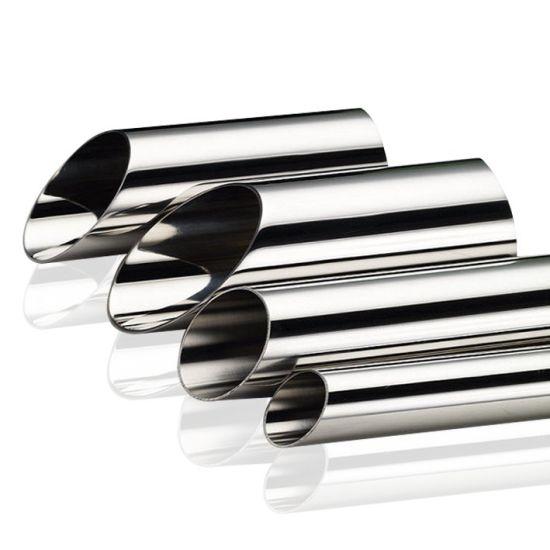 | Stainless Steel Sanitary Tubes Stainless Steel Sanitary Tubes Stainless Steel Sanitary Tubes are precision-engineered tubes manufactured to meet stringent hygiene standards for industries where cleanliness and... View product → |
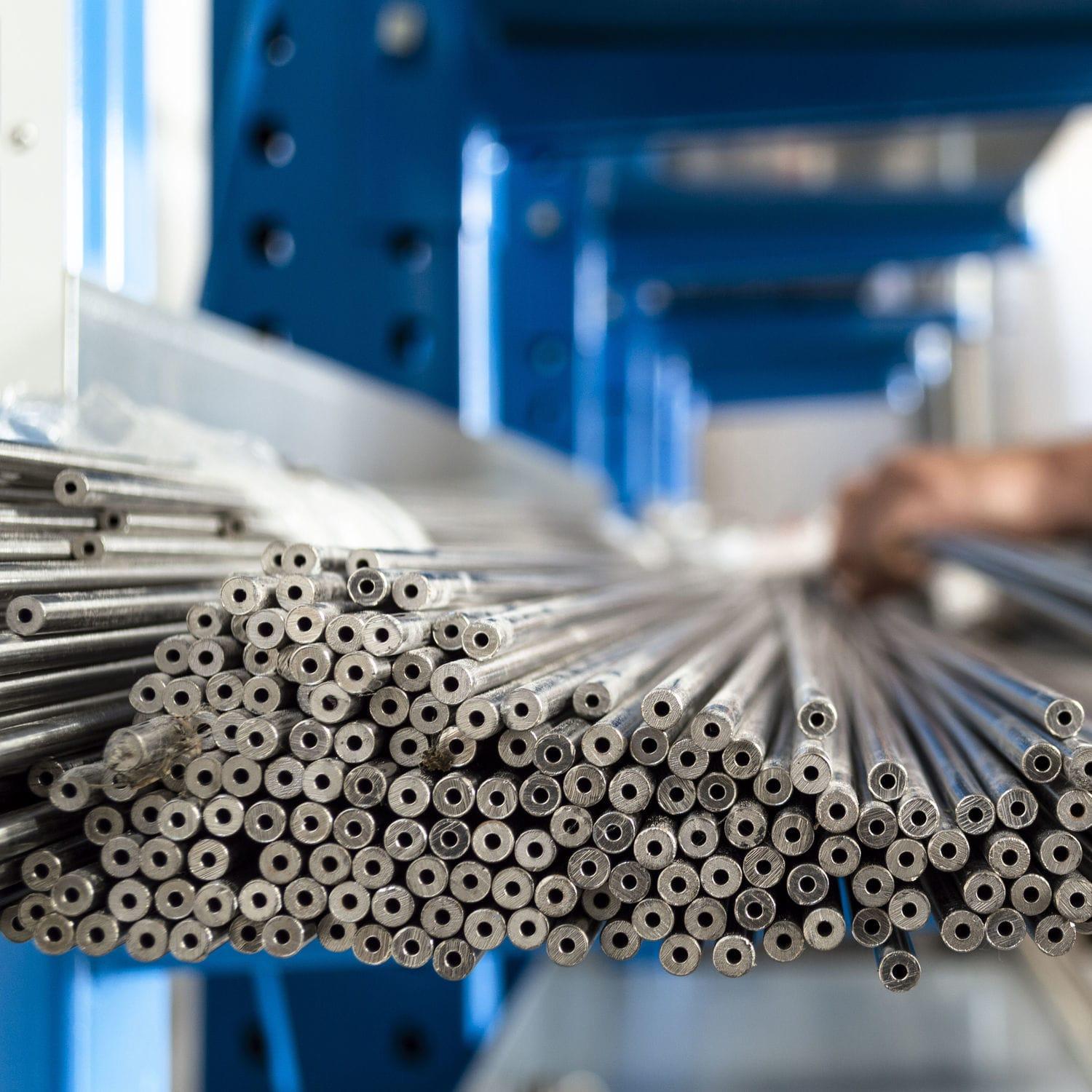 | Stainless Steel Hydraulic Tubes Stainless Steel Hydraulic Tubes Stainless Steel Hydraulic Tubes are engineered for high-pressure hydraulic and pneumatic applications where strength, corrosion resistance, and... View product → |
Frequently asked questions
What information should you provide when ordering industrial SS Tubes?
Provide the fluid, pressure, temperature, corrosion exposure, outside diameter or inside diameter, wall thickness, length, tolerances and required quantity.
How do you choose the right stainless steel grade for tubes?
Match the grade to chloride exposure, acids, temperature and fabrication needs. Common choices include 304L, 316L and duplex grades for more demanding service.
Should you choose seamless or welded stainless steel tubes?
Choose seamless construction for demanding pressure and temperature service when the design requires it. Choose TIG-welded or other welded construction when size, availability, finish or cost favors a welded tube.
Which documents should an SS Tubes Supplier provide?
Request the material test certificate, heat number traceability, dimensional inspection report, chemical and mechanical test results, hydrostatic or nondestructive test records, and compliance certificates for the specified standard.
Related products
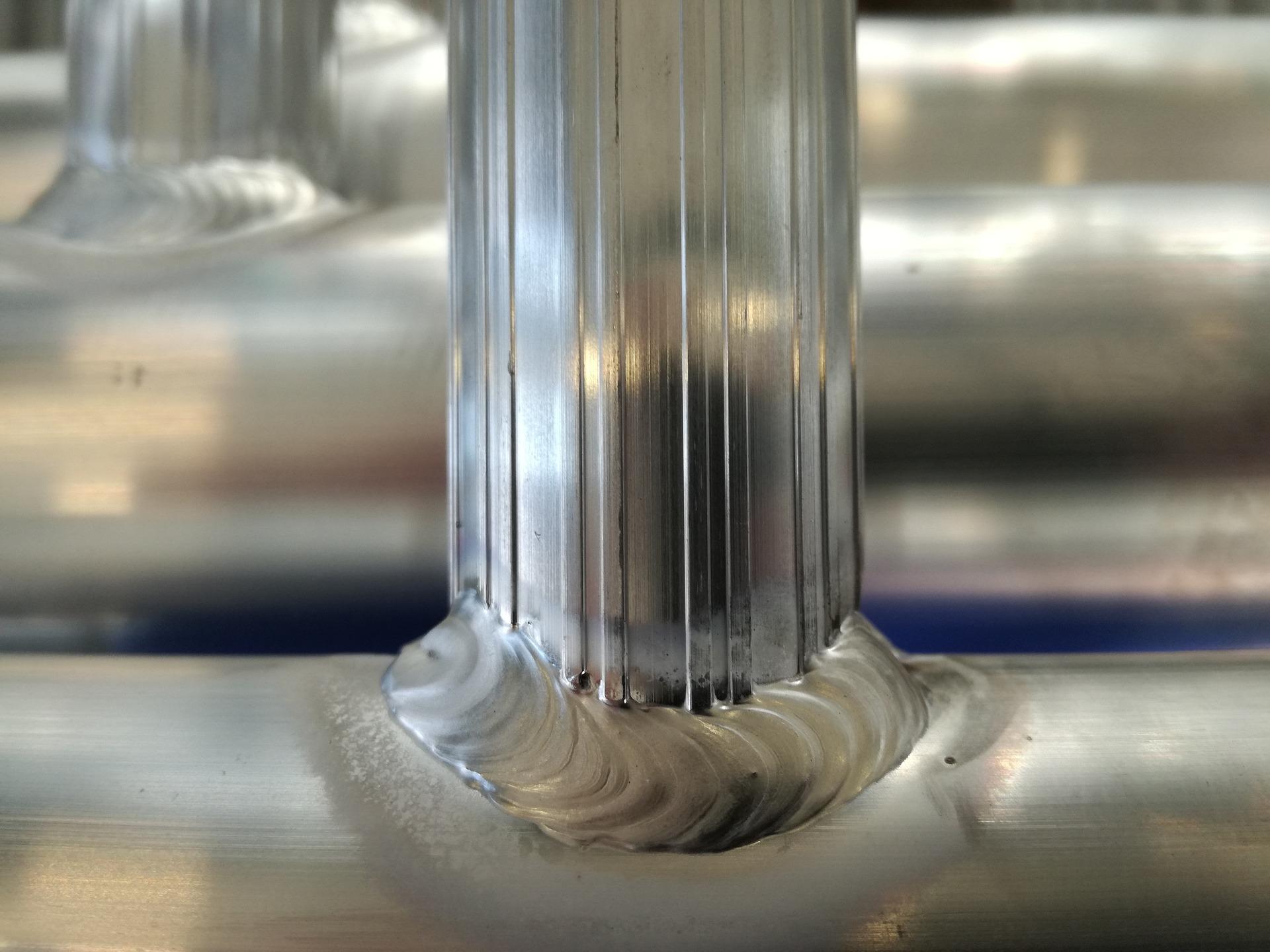 | TIG Welded Tubes & Pipes High-quality TIG Welded Tubes & Pipes are widely used in industries where precision, corrosion resistance, and superior weld quality are essential. View product → |
 | Stainless Steel Instrumentation Tubes Stainless Steel Instrumentation Tubes High-Precision Tubing for Industrial Applications Stainless Steel Instrumentation Tubes Supplier in Vadodara Stainless Steel Instrumentation Tubes... View product → |
 | Seamless Pipes/Tubes Manufacturer & Supplier – Premium Quality Industrial Seamless Pipes and Tubes Seamless Pipes/Tubes Seamless Pipes and Tubes are high-strength... View product → |
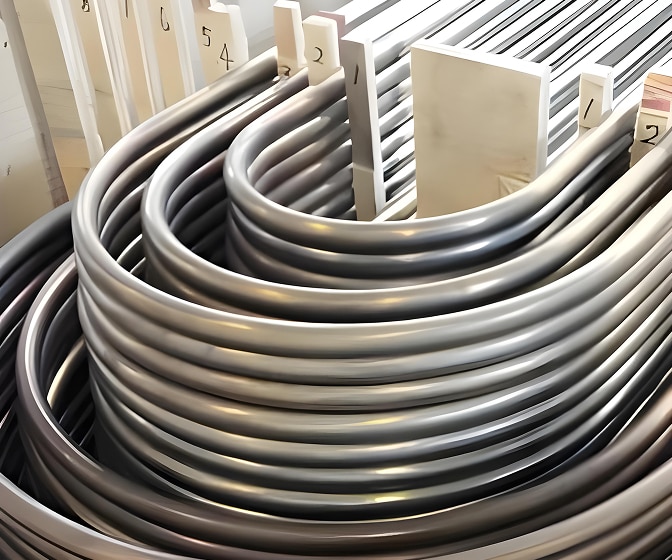 | U – Tubes U – Tubes U-Tubes Manufacturer & Supplier – Premium Quality U-Tubes for Heat Exchangers Our U-Tubes are precision-engineered to deliver exceptional performance... |
Keywords