A stainless product can fail because the alloy resists the wrong corrosion mechanism, the wall calculation ignores temperature or tolerance, or the purchase order leaves pipe and tube dimensions ambiguous. By the end, you will be able to connect the service environment, product standard, pressure calculation, dimensional convention and manufacturing route to a specification a supplier can quote and certify.
Key takeaways
- Match the alloy to chloride, acid, caustic, sensitisation or high-temperature exposure.
- Confirm the product standard separately from the stainless steel grade.
- Calculate wall thickness using pressure, temperature, corrosion and manufacturing allowances.
- Specify dimensions, construction and inspection documents before accepting delivery.
Match the Material Grade to the Actual Corrosion Mechanism
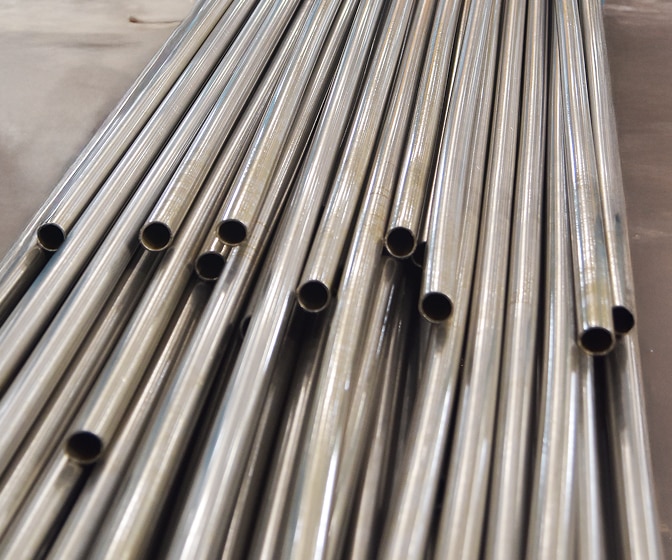
“Stainless” does not identify a corrosion solution. Match Stainless Steel Pipes and Tubes to the mechanism: chloride pitting, crevice attack, chloride stress-corrosion cracking, acid reduction, caustic cracking, sensitisation, or oxidation at temperature.
| Grade | Best fit | Main warning |
|---|---|---|
| 304/304L | Indoor atmospheric service, clean water, mild chemicals and many caustic solutions | Chlorides, marine exposure and deposits can cause pitting or stress-corrosion cracking; concentrated hot caustic can crack stressed parts |
| 316/316L | Better resistance to chlorides, marine atmosphere, brine and process contamination than 304 | Not a seawater guarantee; stagnant crevices, high chloride concentration and elevated temperature can still attack it |
| 321 or 347 | Welded or heated service where carbide precipitation and sensitisation are concerns; elevated-temperature service | Select the grade and allowable stress for the actual design temperature, not temperature resistance by name alone |
| Duplex 2205 or superduplex | Higher chloride resistance, strength and resistance to chloride stress-corrosion cracking | Confirm temperature limits, welding procedure and phase balance; severe acids can still require nickel alloy |
| Nickel alloys | Strong reducing acids, severe caustic service or combined high-temperature chemical exposure | Specify the exact acid, concentration, impurities and temperature; “nickel alloy” is not a single performance level |
Atmospheric 304 suits clean rural or indoor conditions; 316 is safer for coastal salt and de-icing exposure. For acids, identify oxidising versus reducing chemistry: a grade that survives nitric acid can fail in hydrochloric or sulfuric acid. Record chloride level, oxygen, deposits, velocity, crevices and temperature before choosing the alloy.
Separate the Alloy Grade from the Product Standard
316L is an alloy grade; ASTM A312 is a product standard. The grade identifies the stainless chemistry, while the standard defines manufacturing, heat treatment, dimensions, testing and acceptance requirements. Specify both or the order leaves critical decisions unresolved.
| Standard | Product covered | Requirements it helps define |
|---|---|---|
| ASTM A312 | Austenitic stainless steel pipe | Seamless, welded or heavily cold-worked construction, dimensions, heat treatment and tests for corrosive or high-temperature service |
| ASTM A269 | Austenitic stainless steel tubing | Seamless or welded tubing for general corrosion-resistant service, including dimensional and test requirements |
| ASTM A213 | Boiler, superheater and heat-exchanger tube | Seamless tube requirements for elevated-temperature heat-transfer service |
State the complete designation in the purchase order: “316L stainless steel, ASTM A312, welded, solution annealed, NPS 2, ASME B36.19M Schedule 10S,” for example. For tubing, state the outside diameter and wall thickness instead of assuming pipe dimensions; ASTM A269 tubing and ASTM A312 pipe are not interchangeable.
Require the Stainless Steel Pipe Supplier to provide a material test report tied to the heat number. Check that it records chemical composition, tensile and yield properties, elongation, heat treatment, dimensions and every specified test.
Positive material identification can catch a grade mix-up, but it cannot prove wall thickness, weld integrity, internal cleanliness or resistance to your process fluid.
For welded material, write the required weld examination and metallurgical condition into the order. Say whether it must be solution annealed, welded in the annealed condition or supplied under another permitted treatment; never assume post-weld heating improves every stainless product.
Calculate Wall Thickness from Pressure, Temperature and Allowances
A schedule is only a dimensional starting point, not proof that the wall will withstand your service. For internal pressure, begin with the governing code, such as ASME B31.3 for process piping, and establish:
- Design pressure, including upset or relief-valve conditions
- Design temperature and the allowable stress for the actual alloy, product form and temperature
- Outside- or inside-diameter convention, weld-joint efficiency and weld strength reduction factor where required
- Corrosion, erosion, threading, machining and forming allowances
For a B31.3 straight-pipe check using outside diameter, the pressure term is commonly expressed as t = P D / [2(SEW + P Y)].
Here, t is the pressure design thickness, P is design pressure, D is outside diameter, S is allowable stress, E is weld-joint quality factor, W is weld strength reduction factor, and Y is the code coefficient. Use the equation and variables from the governing code edition; equipment and heat-exchanger rules can differ.
Then add the specified corrosion allowance and compare the result with the code’s required minimum wall. Convert that required delivered minimum into nominal wall by allowing for the product-standard negative wall tolerance. A nominal Schedule 40 wall can fail this check if its allowable stress falls at temperature or its tolerance leaves insufficient usable metal.
For Industrial Stainless Steel Tubing, also check ASTM A269, A213 or the purchase specification for dimensional tolerance, surface condition and testing. A thicker sanitary tube with a rough bore is not automatically the safer choice.
Resolve Pipe, Tube and Application-Specific Dimensions Before Ordering
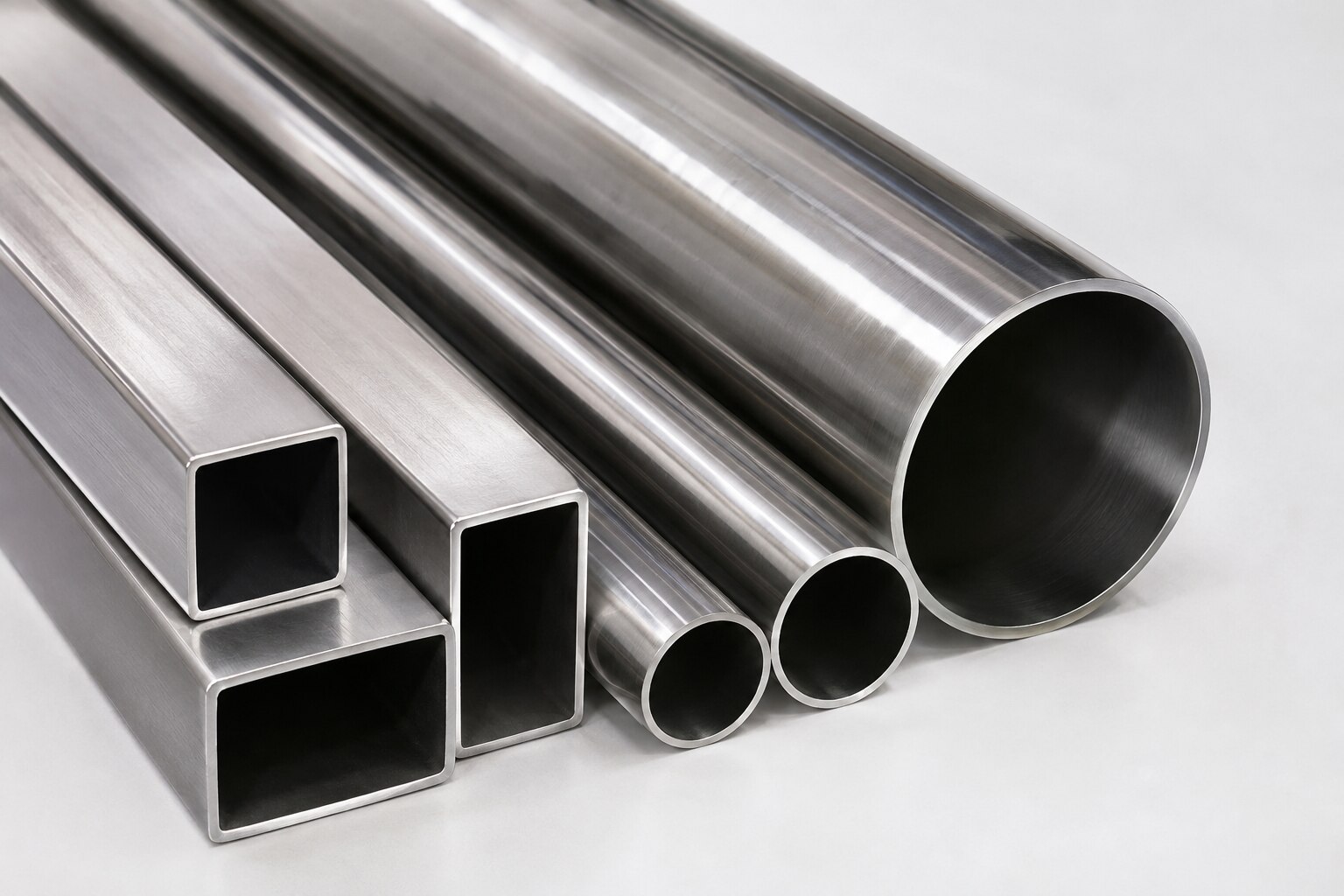
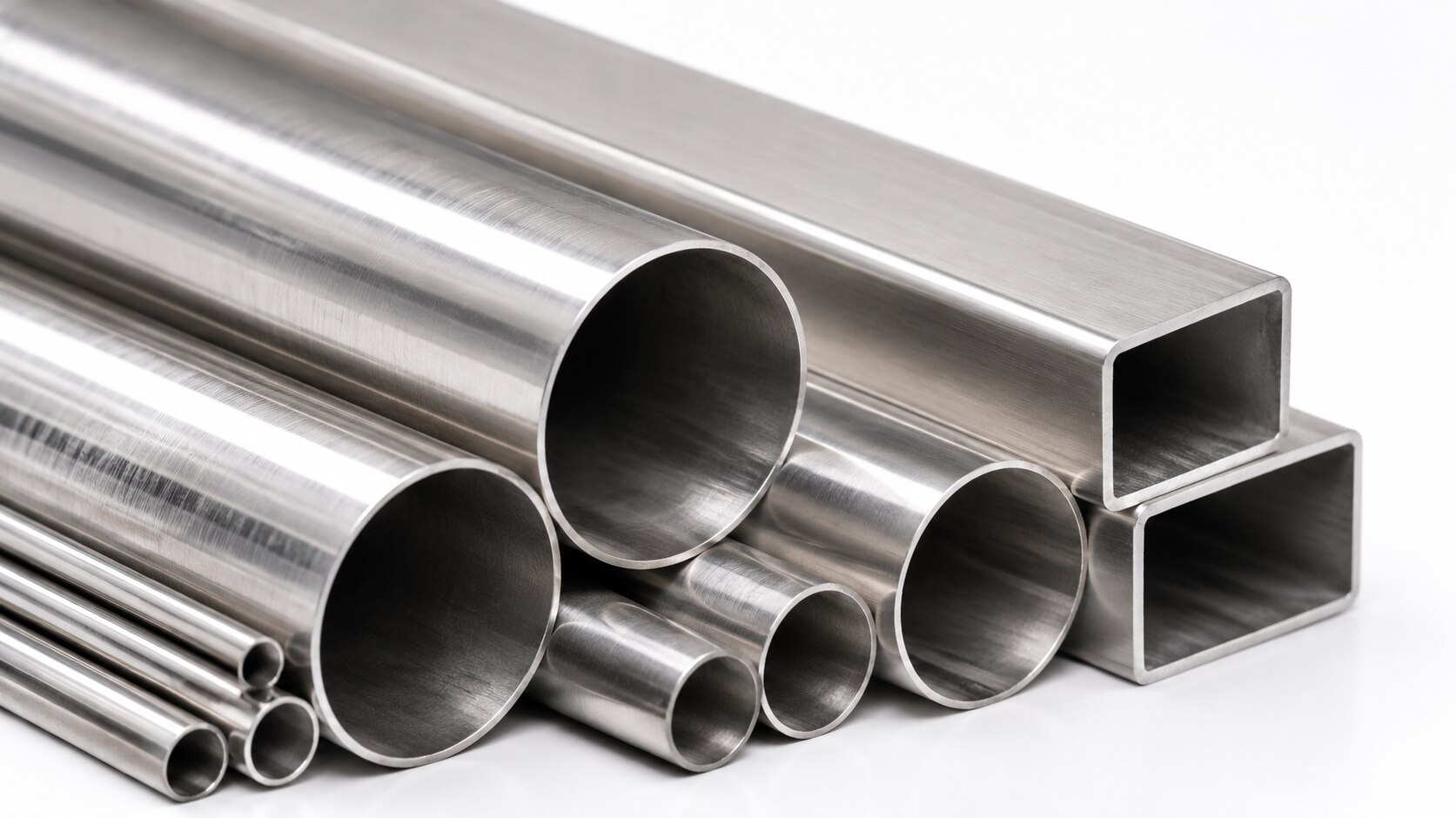
Define the dimension convention before requesting a quote: pipe uses NPS and schedule, while tube uses actual outside diameter (OD) and wall thickness. A tube and pipe with the same nominal wall can have different IDs, flow areas and pressure capacity.
1. Process piping: specify NPS, OD, nominal wall or schedule, and the required minimum wall after the design calculation and corrosion allowance. Reference ASME B36.19M where applicable, then state the actual wall tolerance and inspection requirement. Do not treat Schedule 40 as a pressure design.
2. Instrumentation: specify tube OD and decimal wall thickness, such as 12 mm OD × 1 mm wall. Add the fitting system, bend radius and allowable ovality; nominal bore alone will not ensure ferrule engagement or leak-free assembly.
3. Hydraulic service: specify OD, wall, minimum wall and pressure rating together. State whether the supplier must report nominal wall or guaranteed minimum wall, because tube tolerance can reduce the usable pressure section.
4. Heat exchangers: specify tube OD, nominal wall, minimum wall after forming, bend radius and U-bend geometry. Require limits for bend-zone thinning, ovality and examination; a straight Industrial Stainless Steel Tubing wall can become inadequate after bending.
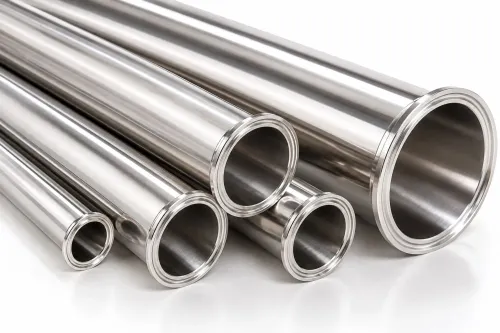
5. Sanitary service: specify OD, wall and ASTM A270 requirements, plus internal roughness, polish, weld condition and cleanability. Thicker Stainless Steel Pipes and Tubes with a rough bore are not automatically suitable for hygienic service.
Write wall thickness in millimetres or decimal inches. If you use gauge or BWG, state the exact gauge number and its equivalent thickness.
Choose Seamless or Welded Construction and Verify the Delivered Material
Seamless construction earns its added cost when the service leaves little tolerance for a weld zone: high pressure, severe temperature cycling, demanding cyclic duty, or a code and purchaser specification that requires seamless material. It is not automatically more corrosion-resistant; grade, heat treatment, surface condition and contamination control still govern performance.
| Construction | What you receive | When it applies |
|---|---|---|
| Seamless | A product formed without a longitudinal weld | High-consequence pressure service or a specification that requires seamless construction |
| TIG-welded | A controlled longitudinal weld, followed by permitted finishing and inspection | Instrumentation, hydraulic and general process service when the product standard, weld procedure and examination are specified |
| Sanitary welded tube | Welded tube with controlled bore finish and weld quality | Hygienic service where ASTM A270 and the purchase specification define surface, polishing and inspection requirements |
TIG-welded tubing is adequate when its weld procedure, nondestructive examination and post-weld condition match the service. Do not assume post-weld heat treatment improves every austenitic tube: excess heat can cause sensitization, while a particular specification may require solution annealing.
Before acceptance, require the Stainless Steel Pipe Supplier or Stainless Steel Tube Supplier to provide:
- Heat-number traceability linking the marking, packing list and material test report.
- A material test report stating chemistry, mechanical properties, heat treatment, dimensions and required tests.
- The product standard, such as ASTM A312, ASTM A269 or ASTM A213, plus the specified grade and manufacturing route.
- Weld examination and surface-finish records where applicable.
SMD Impex should be asked to reconcile those records with the marking and ordered dimensions before release. PMI can expose a grade mix-up, but it cannot prove wall thickness, weld integrity, internal cleanliness or corrosion resistance in your environment.
Related products
 | Stainless Steel Sanitary Tubes Stainless Steel Sanitary Tubes Stainless Steel Sanitary Tubes are precision-engineered tubes manufactured to meet stringent hygiene standards for industries where cleanliness and... View product → |
 | Seamless Pipes/Tubes Manufacturer & Supplier – Premium Quality Industrial Seamless Pipes and Tubes Seamless Pipes/Tubes Seamless Pipes and Tubes are high-strength... View product → |
Frequently asked questions
How do I match stainless steel grade to the corrosion mechanism?
Identify the exposure first: chloride pitting and crevice attack, chloride stress-corrosion cracking, reducing acids, caustics, sensitisation or high-temperature oxidation each demand different grade selection.
Why must I separate the alloy grade from the product standard?
The alloy grade identifies the chemical composition, while the product standard defines dimensions, manufacturing method, testing and acceptance requirements.
How is stainless steel pipe wall thickness calculated?
Use design pressure, design temperature, allowable stress, outside diameter, corrosion or erosion allowance and the manufacturing wall-thickness tolerance.
What dimensions must I confirm before ordering?
Confirm pipe or tube designation, outside diameter or nominal pipe size, wall thickness or schedule, length, end finish, tolerance and application-specific requirements.
Should I choose seamless or welded stainless steel tubing?
Choose based on pressure, size, forming route, surface finish, dimensional tolerance and inspection requirements, then verify the delivered material against its documentation.
Related products
 | Stainless Steel Hydraulic Tubes Stainless Steel Hydraulic Tubes Stainless Steel Hydraulic Tubes are engineered for high-pressure hydraulic and pneumatic applications where strength, corrosion resistance, and... View product → |
 | Stainless Steel Instrumentation Tubes Stainless Steel Instrumentation Tubes High-Precision Tubing for Industrial Applications Stainless Steel Instrumentation Tubes Supplier in Vadodara Stainless Steel Instrumentation Tubes... View product → |
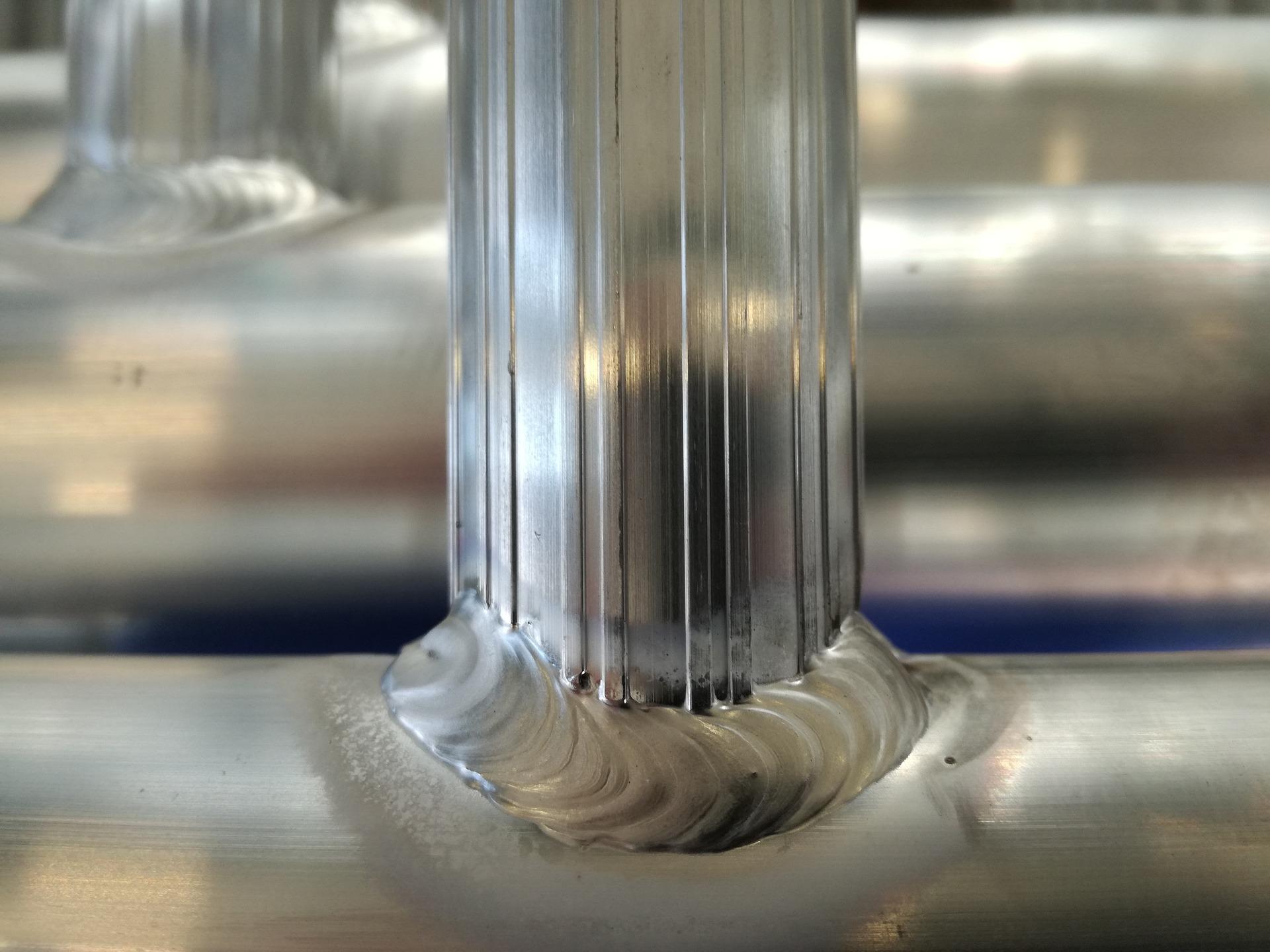 | TIG Welded Tubes & Pipes High-quality TIG Welded Tubes & Pipes are widely used in industries where precision, corrosion resistance, and superior weld quality are essential. View product → |
 | Large Diameter Pipes Manufacturer & Supplier Large Diameter Pipes are engineered for heavy-duty industrial applications where high flow capacity, structural strength, and... View product → |
Keywords