

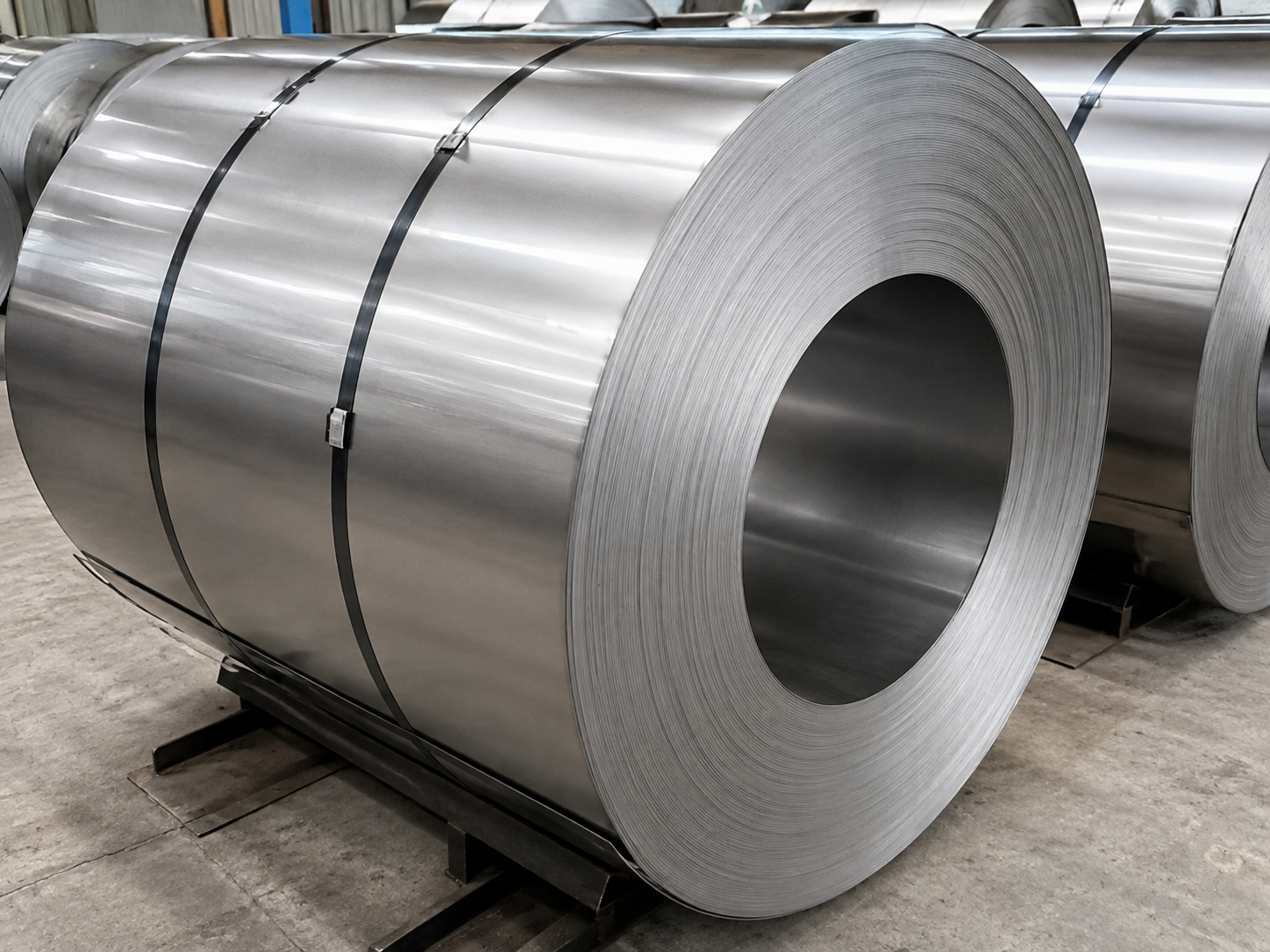
Stainless steel coil procurement directly affects production speed, component consistency and material utilisation. A coil that does not match the processing line can cause feeding problems, excessive trimming, surface defects and unplanned downtime.
SMD Impex supplies SS coils in Gujarat for manufacturers, roll formers, stampers, tube producers and industrial fabricators. Choosing the right supplier requires an evaluation of product specifications, coil handling requirements, documentation and delivery capability.
Match the Coil to Your Production Line
Every processing line has equipment limitations. Before ordering, manufacturers should confirm the decoiler capacity, acceptable coil weight, internal diameter and maximum outside diameter.
The coil specification should include:
- Stainless steel grade
- Thickness
- Width
- Coil weight
- Internal diameter
- Maximum outside diameter
- Surface finish
- Edge condition
- Protective film
- Dimensional tolerance
Providing this information helps prevent the supply of a coil that meets the material requirement but cannot be safely loaded onto the production equipment.
Check Thickness and Width Tolerances
Small variations in coil thickness can influence forming pressure, component weight and product consistency. Width variation can affect roll-forming alignment, blank dimensions and edge trimming.
Buyers should specify the acceptable tolerance according to the finished component. Precision products may require closer control than general fabrication work.
The quotation should clearly indicate whether the material is mill edge or slit edge. If slit material is required, burr height, burr direction and width tolerance may need to be discussed.
Select the Appropriate Grade and Finish
SS 304 coils are widely used for utensils, appliances, engineering products and general fabrication. SS 316 coils may be selected for products exposed to chlorides or more demanding chemical environments.
The finish depends on the end product and processing method. Cold-rolled coils generally offer smoother surfaces and closer tolerances, while hot-rolled coils are often used for heavier industrial components.
If the final product has a visible surface, protective film and scratch prevention become important. Manufacturers should also test whether the film is compatible with forming operations and can be removed without leaving residue.
Compare the Complete Commercial Offer
Two quotations may appear similar while covering different technical conditions. Buyers should compare:
- Exact grade and finish
- Thickness and tolerance
- Width and edge type
- Coil weight range
- Documentation
- Packing method
- Delivery schedule
- Freight terms
The lowest material rate may not be economical if the coil produces more scrap, requires additional slitting or causes production interruptions.
Look for Supply and Delivery Readiness
Manufacturers working with regular production schedules need clarity about stock availability and replenishment lead times. The supplier should communicate whether material is ready for dispatch or will be arranged against the order.
Packaging should protect the coil against moisture, edge damage and shifting during transportation. Suitable supports and secure strapping are essential because coils are heavy and require controlled handling.
Supporting Manufacturing Across Gujarat
Gujarat has a diverse industrial base covering engineering products, appliances, automotive components, process equipment and construction materials. These manufacturers may need regular coil supplies with consistent grades, dimensions and finishes.
A reliable provider should understand repeat-order requirements and maintain clear records of previous specifications. This helps reduce variation between production batches and simplifies future procurement.
Send your required SS coil grade, thickness, width, weight, finish and monthly quantity to SMD Impex. The team can prepare a suitable supply proposal for your manufacturing operations in Gujarat.